What $1.5 Million Buys You in Sydney in 2026: A Suburb-by-Suburb Guide
Reading time 21 minutes
by Parker Hadley
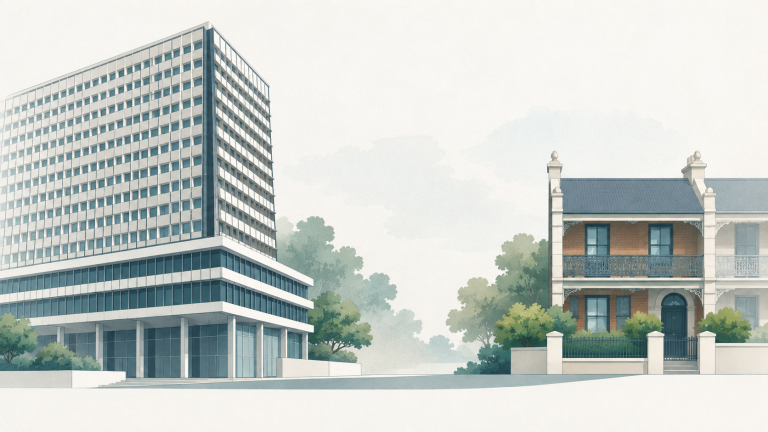
$1.5 million is enough to create genuine choice in Sydney. It is not enough to remove compromise. Recent sales show how the same budget changes shape from the CBD to Camden Park.
There is a strange thing that happens when a Sydney buyer moves from a $1 million budget to $1.5 million. The extra $500,000 feels enormous, because it is. Yet it does not simply buy the same home with a nicer kitchen and better floorboards.
It often changes the property type altogether.
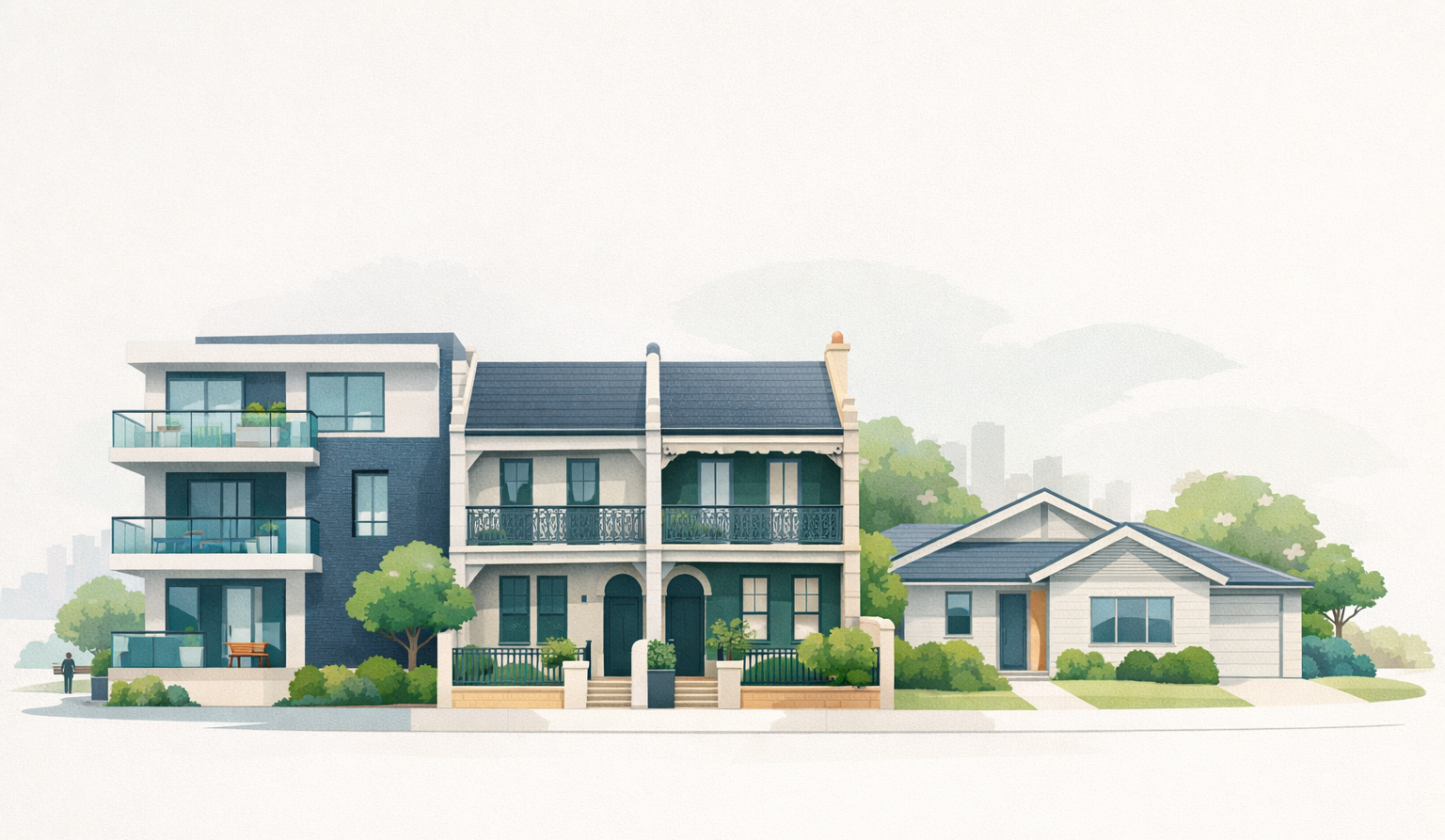
In the CBD, Bondi, St Leonards or Manly, $1.5 million still largely means an apartment. In Balmain or Glebe, it can mean a strong apartment or a very compact terrace with some meaningful compromises. Around Kogarah, Engadine, Winston Hills and Seven Hills, detached houses enter the conversation. Keep travelling into Camden Park, Gledswood Hills or Prestons and the same money can stretch to four or five bedrooms, more land and a newer home.
That is why this guide is not a list of the “best suburbs” for $1.5 million. The better question is what you want the budget to do for you.
Buying a home in Sydney?
See how we help buyers narrow the search, assess properties properly and negotiate with confidence.

Where $1.5 million sits in the Sydney market
Domain’s June 2026 House Price Report put Sydney’s median house price at $1,733,891 and its median unit price at $849,068. A $1.5 million budget is therefore about $234,000 below the citywide house median, but roughly $651,000 above the unit median.
Those medians are useful context, not a shopping list. Sydney is too varied for a single number to tell you whether a house, apartment or townhouse is realistic in a particular street. Recent reported sales are more helpful because they show the actual choices buyers have been making around the budget.
The market backdrop matters too. Sydney values fell again in July, with Cotality reporting a 1.4% monthly decline. Softer conditions can create negotiating room, but they do not make scarce homes common. A good floorplan in the right street can still attract buyers while compromised stock sits around looking increasingly lonely.
At a glance: what the budget tends to buy
| Region | Realistic product around $1.5m | Likely compromise |
|---|---|---|
| CBD and inner city | Stronger 2-bedroom apartment; occasional 3-bedroom apartment or tiny terrace | Parking, land, building quality or internal condition |
| Inner West and peninsula | Good 2 to 3-bedroom apartment; occasional compact terrace | Land, parking, renovation work or a less-prized pocket |
| Eastern Suburbs | Solid 2-bedroom apartment; older 3-bedroom apartment in selected pockets | Parking, strata condition, outlook or distance from the beach |
| Lower North Shore | Newer or larger 2-bedroom apartment; older 3-bedroom apartment | High-rise exposure, strata costs or distance from rail |
| Northern Beaches | 2-bedroom apartment in Manly or Queenscliff; stronger apartment farther north | Parking, lift access, building age or immediate beach proximity |
| St George and inner south | Compact detached house, duplex or substantial townhouse | Smaller land, road position, condition or no parking |
| Sutherland Shire | 3 to 4-bedroom house on useful land in selected suburbs | Longer commute, renovation level or local micro-location |
| Western Sydney and Hills | Family house, duplex or better townhouse, depending on suburb | Distance, road noise, condition or a move away from the most competitive school pockets |
| South-West and Macarthur | Modern 4 to 5-bedroom house, often with double garage and more land | Commute, growth-area supply and greater car dependence |
Guide only. This table summarises representative 2026 sale evidence checked on 3 August, not a promise that matching stock is available every week.
The extra $500,000 changes the product
In our guide to what $1 million buys in Sydney, the dominant inner-city answer was an apartment, often with a clear compromise on size, parking or condition. At $1.5 million, apartments get materially better and houses begin to appear in more parts of the city.
The biggest change is not always bedroom count. It may be a second bathroom, secure parking, an extra living zone, a better building, usable land or the ability to buy without immediately starting a renovation. Those are the features that change daily life and broaden the future buyer pool.
But the extra money can also disguise poor value. A buyer who could not afford a house in their first-choice suburb at $1 million may be tempted to buy the weakest house there at $1.5 million. That is not automatically progress. It may simply be a more expensive compromise.
Sydney CBD and inner city: apartment strength, with rare house exceptions
Around the CBD and inner city, $1.5 million is a strong apartment budget. Recent evidence includes a two-bedroom, two-bathroom apartment at 2205/38 York Street, Sydney, reported sold for $1.5 million in July. It had no car space, which is a neat summary of the trade-off: central access and a modern product, but not necessarily every practical extra.
Houses do appear at the number, but they should be treated as exceptions rather than the normal product. A three-bedroom terrace at 37 Ada Place, Ultimo, sold for $1.5 million in July on just under 79 square metres of land, with one bathroom and no parking. In Surry Hills, a two-bedroom terrace at 19 Chapman Street sold for $1.52 million in May, again without parking.
For an apartment buyer, the budget can deliver a genuinely good home close to work, dining and transport. For a house buyer, it usually means accepting very little land, no parking, older condition or a position that will not suit everyone.
The due diligence focus should shift accordingly. In an apartment, investigate the building, levies, capital works, defects, fire compliance and owner-occupier mix. In a small terrace, pay close attention to structure, heritage constraints, damp, access and whether the floorplan works without a costly rebuild.
Inner West and peninsula: better apartments and compact terraces
At $1.5 million, Balmain, Rozelle, Glebe and surrounding Inner West pockets offer a much more interesting mix. A three-bedroom, two-bathroom apartment with parking at 98/2-18 Buchanan Street, Balmain, sold for $1.5 million in June. In Glebe, a three-bedroom apartment with parking at 26/1 Stewart Street also sold for $1.5 million in June.
There are house results at the same price, but the land can be extremely tight. A two-bedroom house at 5 Lyndhurst Street, Glebe, sold for $1.5 million on a reported 58 square metres. It is evidence that a house is possible, not proof that $1.5 million is a comfortable house budget across the Inner West.
The practical choice is often between a larger, easier apartment and a small terrace with more independence but less internal space, parking and outdoor utility. Buyers who automatically prefer a house can end up paying a substantial premium for a title type while accepting a worse home.
Street-by-street knowledge matters here because noise, aspect, parking pressure and topography can change quickly. Our suburb profiles for Balmain and Rozelle give more local context, but the property still needs to pass the ordinary-life test: school mornings, shopping, bins, prams, guests and the trip home on a wet Tuesday.
Eastern Suburbs: a serious apartment budget, not a broad house budget
In the Eastern Suburbs, $1.5 million remains primarily an apartment budget. Recent Bondi results around the mark included two-bedroom apartments with parking at 17/22-28 Wellington Street and 9/276 Birrell Street. A two-bedroom apartment at 19/36 Pacific Street, Bronte, sold for $1.5 million without parking.
Move between pockets and the bedroom count can improve. A three-bedroom apartment with parking at 4/5 Onslow Street, Rose Bay, sold for $1.5 million in May, while a three-bedroom, two-bathroom apartment with parking at 9/861 Anzac Parade, Maroubra, sold at the same level in April.
This is where suburb labels become dangerous. Two properties with the same price and bedroom count can carry very different value because of aspect, noise, strata history, renovation quality, natural light and walkability. A small block with sound finances may be worth more to a buyer than a glossy building with an expensive maintenance story waiting downstairs.
The budget works best for buyers who value location and lifestyle more than land. If a detached house is non-negotiable, continuing to force the Eastern Suburbs brief at this number is likely to produce either a long wait or a property with problems you would never have chosen elsewhere.
Lower North Shore: choice within apartments, but building selection is everything
On the Lower North Shore, $1.5 million opens a useful apartment range. Two-bedroom, two-bathroom apartments with parking in the 599 Pacific Highway development at St Leonards sold for $1.45 million and $1.5 million in July. A two-bedroom apartment with parking in North Sydney also sold for $1.5 million earlier in the year.
Older or less-central stock can provide more space. A three-bedroom, two-bathroom apartment with two parking spaces at 168/25 Best Street, Lane Cove, sold for $1.58 million in February. That is slightly above the headline budget, but it shows what a modest stretch can change when buyers move away from the newest towers.
The temptation is to compare apartments on internal area and finishes alone. The building can matter more. Lift count, sinking-fund health, cladding, waterproofing, embedded networks, special levies and the proportion of short-term or investor-owned stock all affect the holding experience and resale market.
This part of Sydney suits buyers who want transport and amenity without chasing a house at any cost. The compromise may be strata expense rather than distance. That can be a perfectly sensible exchange, provided the expense is understood before contracts are signed.
Northern Beaches: beach access still means apartment living
A $1.5 million budget can put a buyer into Manly, Queenscliff or Dee Why, but usually in an apartment. A two-bedroom apartment at 2/2A Kangaroo Street, Manly, sold for $1.5 million in July without parking. A two-bedroom, two-bathroom apartment with two car spaces at 323/168 Queenscliff Road, Queenscliff, sold for $1.5 million in June.
At Dee Why, recent examples around the mark included two-bedroom, two-bathroom apartments with one or two parking spaces. The move north can buy a newer product, more parking or a larger floorplan, but it does not remove the need to assess the building and exact position.
Beach proximity, traffic, bus access, aircraft or road noise, steep approaches and flood or coastal exposure can vary sharply over short distances. A home that looks close to everything on a map may feel quite different during the weekday commute or after dark.
This is a lifestyle-first choice. If the beach is genuinely part of the way you live, the apartment trade-off may make sense. If it is mostly an attractive backdrop to the listing photos, there may be better ways to deploy the same budget.
St George and inner south: compact houses enter the frame
St George is where the product mix begins to shift more clearly. A four-bedroom, two-bathroom house at 48 Austral Street, Kogarah, sold for $1.5 million in May on 276 square metres. It had no car space, so the extra bedrooms came with a compact block and a practical compromise.
Nearby results help define the range. A three-bedroom house on 278 square metres at 66 Bay Street, Rockdale, sold for $1.62 million in February. A two-bedroom house on 448 square metres at 20 Knight Street, Arncliffe, sold for $1.676 million in May. A buyer can improve land, bedroom count or condition, but rarely all three at once around the headline budget.
For families who want a house and still need reasonable access to the CBD or airport, this can be a productive hunting ground. Duplexes and townhouses may offer the better-balanced option when the detached houses at the price are too compromised.
Due diligence should include aircraft and road noise, flood and overland-flow information, planning controls, building approvals, parking practicality and the genuine walk to rail. “Close to the station” has done quite a bit of work in Sydney advertising over the years.
Sutherland Shire: a genuine family-house budget in selected suburbs
In parts of the Sutherland Shire, $1.5 million becomes a much more comfortable family-house budget. A three-bedroom, two-bathroom house with a double garage at 4 Nolan Avenue, Engadine, sold for $1.5 million in June on about 575 square metres.
Other Engadine results show the spread available around it. A three-bedroom house on about 639 square metres sold for $1.35 million in July, while a five-bedroom, three-bathroom home on 752 square metres sold for $1.6 million. Condition, position and layout decide where the property lands inside that range.
The appeal is obvious: a detached home, usable outdoor space, parking and bedrooms that do not require architectural origami. The exchange is a longer trip to some jobs, more reliance on the car and the need to understand local bushfire, slope and drainage conditions.
For a family whose daily life is already tied to the south, the Shire may provide a far better home than an inner apartment bought only to preserve a postcode. For a household commuting north five days a week, the spreadsheet and the lived experience may tell different stories.
Western Sydney and the Hills: family houses, dual-use layouts and strong townhouses
Across Western Sydney and the Hills, the same budget can buy several different products. A four-bedroom, two-bathroom house on 569 square metres at 124 Junction Road, Winston Hills, sold for $1.48 million in February. Another four-bedroom house on 556 square metres at 40 Barnetts Road sold for $1.555 million.
At Seven Hills, 29 and 29A Abbott Road sold for $1.5 million with four bedrooms, three bathrooms and two parking spaces on a reported 698 square metres. At Baulkham Hills, a three-bedroom townhouse with two bathrooms and two car spaces sold for $1.5 million. The budget can therefore buy land, a flexible or dual-use setup, or a lower-maintenance townhouse closer to the strongest amenities.
The big trap is assuming that more land automatically means better value. Main roads, awkward blocks, easements, unapproved additions, flood exposure, school catchments and future development can change the resale story. A large site with poor usability is still a poor site, only larger.
This region often works for buyers who need a conventional family layout and want to retain access to employment across Parramatta, Norwest and the wider west. The brief should be built around actual weekly travel, not a Sunday morning drive with no traffic.
South-West Sydney and Macarthur: size, land and newer homes
Farther south-west, $1.5 million can purchase a substantially larger family home. A five-bedroom, two-bathroom house with a double garage at 34 Hindmarsh Avenue, Camden Park, sold for $1.5 million in June on 707 square metres. A four-bedroom house at 10 Peterson Avenue, Gledswood Hills, also sold for $1.5 million, on 438 square metres.
Prestons produced a similar family-scale result in July, with a five-bedroom, two-bathroom house on 540 square metres at 36 Romana Square selling for $1.5 million. These are homes designed around space, parking and family utility rather than inner-city access.
The due diligence questions change. Growth-area supply, estate density, developer quality, infrastructure timing, road access and the amount of competing new stock can matter as much as the individual house. A nearly new home is not maintenance-free, and a big floorplan is not automatically a good one.
For buyers with local family, flexible work or employment in the south-west, the value equation can be compelling. For someone determined to preserve an inner-city routine, the extra bedrooms may spend most of the week apologising for the commute.
What $1.5 million generally will not buy
A defined budget becomes more useful when it includes a realistic list of exclusions. Across most of Sydney, $1.5 million should not be treated as a reliable path to:
- A renovated, freestanding family house in a premium inner-city, Eastern Suburbs, Lower North Shore or beachside location
- A house with land, parking, excellent condition and no location compromise in the Inner West
- A large three-bedroom apartment in a top-tier building with views, parking and low strata costs close to the CBD
- A turn-key home in the most competitive school catchment streets without buyer competition
- The guide price being an accurate prediction of the final price
There will always be exceptions. They usually come with a reason. The buyer’s job is to find the reason before assuming they have found a bargain.
Do not forget the costs beyond the purchase price
Under the general NSW transfer-duty rates applying from 1 July 2026, duty on a $1.5 million purchase is $63,787. That is before legal work, building and pest inspections, strata reports, lender costs, moving and any immediate repairs. Revenue NSW should always be checked for the buyer’s actual circumstances.
| Savings / equity contribution | Deposit amount | General NSW duty | Total before other costs |
|---|---|---|---|
| 5% | $75,000 | $63,787 | $138,787 |
| 10% | $150,000 | $63,787 | $213,787 |
| 20% | $300,000 | $63,787 | $363,787 |
Illustration only. A lender’s required contribution and the deposit payable under the sale contract are related but not identical. Loan approval, LMI or low-deposit premiums, exchange deposit and concessions depend on individual circumstances.
If $1.5 million is your total acquisition ceiling rather than the property price, the target purchase price is closer to $1.44 million before allowing for legal, inspection and moving costs. That distinction is worth making before the search begins, not while standing in a crowded kitchen at the second inspection.
First-home buyer transfer-duty assistance in NSW does not extend to a $1.5 million purchase. The current scheme provides an exemption up to $800,000 and a concession above $800,000 but below $1 million, subject to eligibility.
How to choose between location, space and land
There is no universally correct way to spend $1.5 million. There is only a choice that fits the household and a choice that does not.
| Priority | Likely purchase | Questions to answer |
|---|---|---|
| Location first | Premium apartment or compact terrace closer to the CBD, beach or established village | Building risk, strata costs, parking, storage and whether the floorplan supports the next life stage |
| Family function first | Compact house, duplex or townhouse through St George, the Shire, west or Hills | School and work travel, bedroom utility, outdoor space and future resale depth |
| Land and flexibility first | Larger house farther west or south-west, sometimes with dual-use potential | Infrastructure, supply, approvals, environmental risk and the real cost of time spent travelling |
Once the brief is clear, value the property rather than negotiating from the guide. Comparable sales, condition, competition and the vendor’s campaign all matter. Our guide to making an offer in NSW explains why the strongest offer is a package of price, conditions, timing and readiness rather than a number shouted into the void.
And do the unglamorous checks. Read the contract. Review the strata or building information. Confirm finance. Understand the street at different times of day. If the listing still requires detective work, keep investigating rather than filling the gaps with optimism.
Kevin’s take
The buyers who do best at this level are rarely the ones trying to keep every suburb and property type open. They decide what matters, understand where the budget is genuinely competitive and wait for a home that supports the life they are actually buying it for.
Buying a home in Sydney?
See how we help buyers narrow the search, assess properties properly and negotiate with confidence.
Frequently asked questions
Can I buy a house in Sydney for $1.5 million?
Yes, but the answer depends heavily on location and property type. Recent 2026 sales show compact houses around Kogarah and larger family houses in suburbs such as Engadine, Winston Hills, Seven Hills, Camden Park, Gledswood Hills and Prestons. In the CBD, Eastern Suburbs, Lower North Shore and Northern Beaches, the budget is still more commonly an apartment budget.
Can $1.5 million buy a house in the Inner West?
Occasionally. Recent results include very compact terraces around the price, but they may have tiny land, no parking, one bathroom or renovation needs. A good two or three-bedroom apartment is the more repeatable product at this budget in Balmain, Glebe and similar inner pockets.
Where can I buy a family house under $1.5 million in Sydney?
Selected parts of St George, the Sutherland Shire, Western Sydney, the Hills, South-West Sydney and Macarthur provide the strongest evidence. Exact results vary by street, condition, land and competition, so the suburb median should be used as context rather than a purchase rule.
How much is stamp duty on a $1.5 million home in NSW?
Using the general NSW transfer-duty rates effective from 1 July 2026, duty on $1.5 million is $63,787. Eligibility, purchaser status and policy changes can affect the outcome, so confirm the amount with Revenue NSW or your solicitor before relying on it.
How much deposit do I need for a $1.5 million property?
A 5% contribution is $75,000, 10% is $150,000 and 20% is $300,000. The amount a lender requires depends on income, liabilities, security, policy and mortgage-insurance settings. The deposit payable under the sale contract is a separate item that is commonly 10% but may be negotiated.
Is it better to buy an inner-city apartment or a house farther out?
Neither is automatically better. The apartment may provide better access, lifestyle and lower day-to-day travel. The house may provide land, bedrooms, parking and more control over improvements. Compare the property against how the household will use it on an ordinary week, then assess the building or land risks properly.
Does a softer market mean I should offer below the guide?
Not automatically. A softer market can create leverage, especially on stale or compromised stock. A well-priced home with real competition may still require a strong offer. Build an evidence range and walk-away price before negotiating rather than applying one discount to every listing.
The takeaway
$1.5 million is one of Sydney’s most revealing budgets. It is enough to offer real choice, but not enough to avoid choosing. Close in, the money buys stronger apartments and occasional compact houses. Through the middle ring, houses become more realistic but the blocks and condition can tighten. Farther south and west, space and land improve sharply.
Do not start with a postcode and make the home fit. Start with the life the property needs to support, then use recent sales to find the parts of Sydney where the budget can buy it without asking you to ignore too much.
Buying a home in Sydney?
See how we help buyers narrow the search, assess properties properly and negotiate with confidence.
Related insights
Buying a Tenanted Property in NSW: When Can You Actually Move In?
Peninsula & Bays Property Pulse October 2026