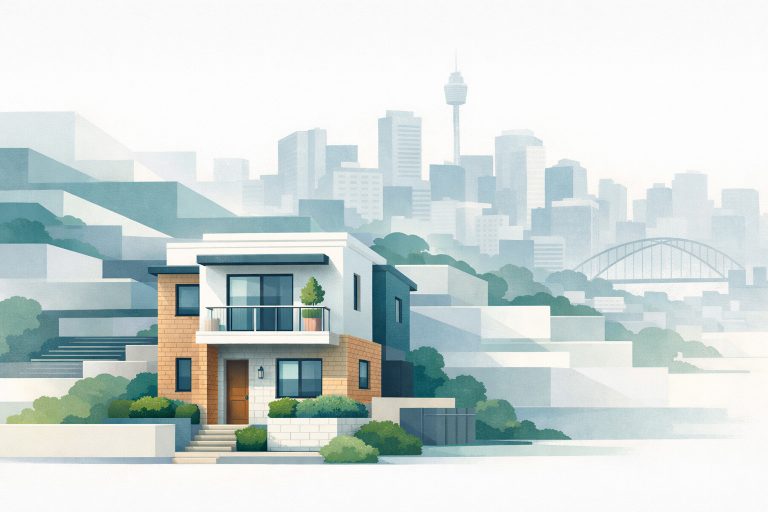
What $1 Million Buys in Sydney in 2026
Reading time 11 minutes
by Parker Hadley
Originally published 7 May 2026. Updated 21 July 2026.
A $1 million budget is still meaningful in Sydney. It just means very different things depending on where and what you are willing to buy.
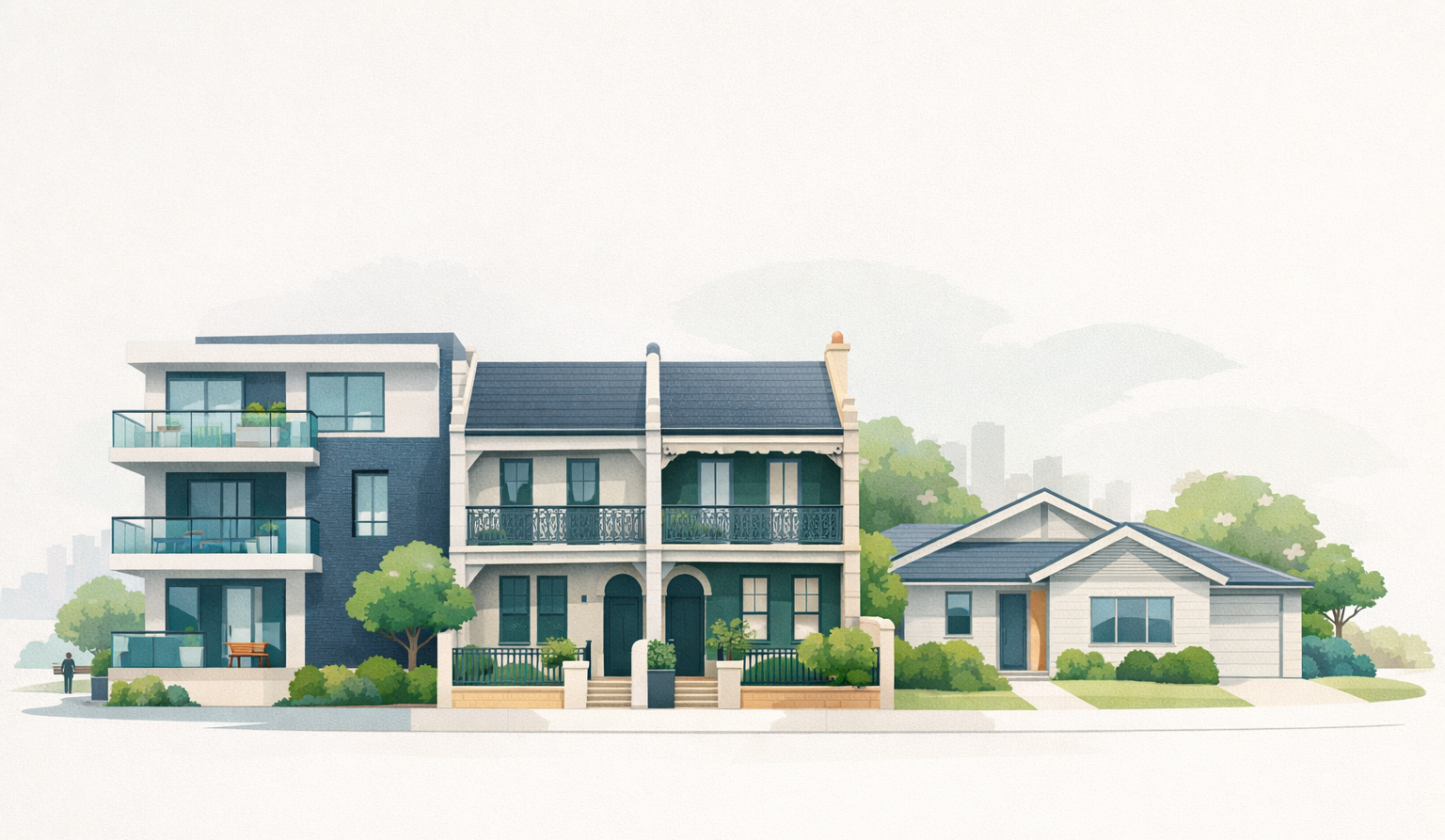
Close to the CBD, the Eastern Suburbs, Lower North Shore and Northern Beaches, $1 million is primarily an apartment budget. In the Inner West, it may secure an older apartment, a compact unit or an occasional townhouse with clear compromises. Further south, west and south west, the same budget can open the door to villas, duplexes, townhouses and selected freestanding homes.
The mistake is treating every $1 million property as comparable.
A well located apartment with light, parking and a healthy strata plan can be a much stronger asset than a compromised house simply because the house has land. Equally, a buyer who genuinely needs three bedrooms, outdoor space and school flexibility may get more useful value by moving further from the CBD.
This guide is not a promise that every product described will be available every week. It is a practical way to understand how Sydney’s trade offs change around the $1 million mark.
|
KEY TAKEAWAY At $1 million, Sydney buyers are rarely choosing between perfect properties. They are choosing which compromise gives them the strongest combination of lifestyle, quality, affordability and future flexibility. |
Why $1 million is such an important threshold
The number sits in the middle of several buyer pressures.
For eligible first home buyers in NSW, a purchase above $800,000 and below $1 million may receive a concessional transfer duty rate. At exactly $1 million, the current first home buyer concession no longer applies.
It is also a common borrowing and search ceiling. That concentrates competition around properties guided in the high $800,000s and $900,000s, particularly apartments, villas and entry level houses.
One extra bid can change more than the purchase price. It can alter the duty position, repayments and the cash remaining after settlement.
Buying a home in Sydney?
See how we help buyers narrow the search, assess properties properly and negotiate with confidence.

The quick Sydney comparison
Around $1 million, buyers can broadly expect:
- Sydney CBD and inner city: one or two bedroom apartments, often with compromises on internal size, parking, outlook or building costs.
- Inner West: older two bedroom apartments, compact units and occasional townhouses away from premium village pockets.
- Eastern Suburbs: mostly one bedroom or compact two bedroom apartments, with better size as the search moves south.
- Lower North Shore: older two bedroom apartments, often with stronger transport but significant strata and building due diligence.
- Northern Beaches: apartments rather than houses, with product improving away from Manly and the most premium coastal pockets.
- South Sydney and St George: larger apartments, villas and selected townhouses, depending on station access and building quality.
- Western Sydney: villas, duplexes, townhouses and selected freestanding homes.
- South Western Sydney: family sized townhouses, duplexes and houses in selected suburbs, with commute and build quality becoming central trade offs.
This is a starting map, not a valuation. Individual streets and buildings can move the result dramatically.
Sydney CBD and inner city
At $1 million, the inner city is mainly an apartment market.
The budget may buy a one bedroom apartment with a strong location and good building amenity, or a two bedroom apartment with compromises on size, parking, view or building age. Areas such as the CBD, Surry Hills, Darlinghurst, Ultimo, Redfern and Waterloo can all present different versions of that trade off.
The building matters as much as the postcode. Check:
- Internal area and whether both bedrooms are genuinely usable.
- Natural light, cross ventilation and outlook.
- Strata levies and the capital works fund.
- Defects, waterproofing, cladding and major works.
- Lift reliability and the number of apartments sharing facilities.
- Parking, storage and visitor access.
- Short term letting exposure and the owner occupier mix.
A smaller apartment in a well run boutique building can hold up better than a larger apartment burdened by high facilities costs or unresolved defects.
The Inner West
The Inner West is not one market.
Around $1 million, premium peninsula suburbs such as Balmain, Birchgrove, Rozelle, Drummoyne and Abbotsford are largely apartment territory. The same budget may stretch further in Ashfield, Croydon, Dulwich Hill, Marrickville or parts of Canterbury Bankstown, but houses remain difficult in many established pockets.
Realistic options can include:
- Older two bedroom apartments in small blocks.
- Apartments with parking but limited outdoor space.
- Ground floor units with courtyards.
- Compact townhouses in less premium locations.
- Properties affected by road noise, flight paths or weaker street position.
The strongest Inner West buy is often not the most polished one. Look for usable floorplans, light, privacy, a healthy building, walkability and a street that still feels good on a Tuesday morning.
Be careful paying a suburb premium for a dark apartment, difficult access or a building with weak financials. The village name will not fix the property.
Eastern Suburbs
The closer the search moves to the harbour and beaches, the smaller the likely product becomes.
In the most expensive Eastern Suburbs, $1 million may mean a one bedroom apartment or a compact two bedroom property without parking. Moving south towards areas such as Maroubra, Eastlakes, Hillsdale or nearby pockets can improve size and functionality, but building quality and transport still vary.
Check whether you are paying for lifestyle you will genuinely use. Beach proximity is valuable if it shapes daily life. It is less useful if the apartment is cramped, noisy or difficult to hold.
For resale, a good floorplan, natural light, parking where buyers expect it and a manageable strata profile will usually matter more than fashionable finishes.
Lower North Shore
The Lower North Shore offers strong transport, established village centres and access to employment, but land values keep the $1 million buyer in the apartment market.
Older two bedroom apartments may appear around this level in selected parts of Lane Cove, Artarmon, Wollstonecraft, Neutral Bay, Chatswood fringe areas and neighbouring suburbs. The exact product shifts quickly with transport distance, parking, aspect and building condition.
Older does not automatically mean worse. Many established brick blocks have good proportions and sensible layouts. But buyers still need to investigate concrete, waterproofing, balconies, roofs, windows, plumbing and capital works planning.
Do not let proximity to a station replace strata due diligence.
Northern Beaches
At $1 million, the Northern Beaches is generally an apartment search.
Manly will usually offer the smallest entry point. Moving north through Dee Why, Brookvale, Collaroy, Narrabeen and surrounding areas can improve bedroom count or internal size, but transport and flood exposure need attention.
For coastal apartments, investigate:
- Salt exposure and building maintenance.
- Flood and stormwater risk.
- Strata insurance and planned works.
- Parking and public transport access.
- Noise from main roads and hospitality areas.
- Whether the property has a genuine point of difference.
Lifestyle demand can be powerful, but average apartments face competition from better buildings and future supply.
South Sydney and St George
Moving south can increase space without completely abandoning city access.
Depending on the suburb, $1 million may buy a larger two bedroom apartment, a three bedroom apartment, a villa or a compact townhouse. Areas around Kogarah, Rockdale, Carlton, Arncliffe, Wolli Creek and further south each carry different supply, transport and building risks.
Newer apartment precincts require careful defect and supply analysis. Older blocks may offer more land per apartment and lower facilities costs, but maintenance still needs checking.
For families, focus on bedroom usability, storage, lift or stair access, local parks and how the trip to school or childcare actually works.
Western Sydney
Western Sydney is where the product mix begins to change most clearly.
Around $1 million, buyers may find villas, duplexes, townhouses and freestanding homes in selected suburbs. The exact opportunity depends on station access, school demand, flood exposure, lot size, renovation quality and proximity to major roads.
More land does not remove the need for due diligence. Check:
- Flood and overland flow mapping.
- Easements and drainage.
- Unapproved additions.
- Building condition and termite risk.
- Heat, orientation and tree cover.
- Future road or infrastructure changes.
- Travel time at the hours you actually commute.
A house that creates an exhausting daily life is not automatically better value than a well chosen apartment closer in.
South Western Sydney
South Western Sydney can offer the greatest amount of accommodation around $1 million.
Selected suburbs may provide three or four bedroom houses, duplexes or modern townhouses. This can work well for families who prioritise space, schools and a longer holding period.
The main trade offs are often commute, estate quality, supply and construction. In newer areas, inspect drainage, retaining walls, landscaping, build quality and the amount of similar stock planned nearby. In established suburbs, assess renovation history, street position and access to transport and services.
Do not buy a large home in a location that does not fit the household simply because the floorplan looks generous online.
What $1 million generally does not buy
Buyers need a realistic starting point.
Around $1 million generally does not buy:
- A renovated freestanding family home in the premium Inner West.
- A quality house in the Eastern Suburbs, Lower North Shore or Northern Beaches.
- A large harbour side apartment with parking and no compromises.
- A new, spacious and perfectly located apartment with low strata costs.
- A property that removes every trade off.
If a listing appears to deliver all of those things around $1 million, find the compromise. It may be location, title, condition, size, noise, building risk or an unrealistic guide.
How first home buyers should use the budget
First home buyers often feel pressure to maximise every dollar because the first purchase feels like the only chance to get the brief right.
It is not.
The strongest first purchase usually balances:
- Repayments that remain manageable.
- A property that can be held for a useful period.
- Broad resale appeal.
- A floorplan that survives likely life changes.
- Building and location risks the buyer understands.
- Enough cash left for life after settlement.
An extra bedroom can be valuable. So can a shorter commute, lower strata, better light or the ability to stay for seven years instead of three.
How families should compare the options
For families, the central question is not apartment versus house. It is what the household needs the property to do.
Compare:
- Usable bedrooms rather than advertised bedrooms.
- Storage, pram and bicycle access.
- Parks, schools and childcare routes.
- Outdoor space and whether it is genuinely practical.
- Noise during bedtime and weekends.
- Work commutes for both adults.
- The likely cost of moving again.
- Flexibility if the family changes.
A high quality apartment can be a better family home than a compromised house. A house further out can be the better decision if the daily life and holding period support it.
A better way to compare properties
Create the same scorecard for every serious option:
- Location: street, transport, schools, amenities and daily convenience.
- Property: layout, light, condition, parking, storage and outdoor space.
- Risk: strata, defects, flood, planning, noise, heritage and future development.
- Value: recent comparable sales and the cost of each compromise.
- Holding: repayments, levies, maintenance and likely ownership period.
- Resale: who else would want the property and why.
That process makes a $950,000 apartment and a $1 million townhouse easier to compare without pretending they are the same product.
Frequently asked questions
Can I buy a house in Sydney for $1 million in 2026?
Yes, in selected western and south western suburbs and occasionally in other pockets with significant compromises. It is generally not a realistic house budget in Sydney’s premium inner ring.
Is $1 million enough for a first home in Sydney?
Yes. It can buy a range of apartments, villas, townhouses and selected houses. The right option depends on household needs, commute, property quality and the ability to hold it comfortably.
What happens to NSW stamp duty at $1 million?
The current first home buyer concessional band applies above $800,000 and below $1 million. At exactly $1 million, standard transfer duty generally applies.
Is an apartment still a good purchase?
It can be. Look for strong location, natural light, a functional floorplan, healthy strata, reasonable ongoing costs and broad future demand. Avoid judging apartments as one category.
Should I move further out for a house?
Only if the location and daily life work. More land and bedrooms can be valuable, but not if the commute, costs or neighbourhood compromise the household’s real needs.
Buying a home in Sydney?
See how we help buyers narrow the search, assess properties properly and negotiate with confidence.
The takeaway
A $1 million budget does not buy one standard version of Sydney property.
It buys location in one market, space in another and land in another. Every shift changes the compromise.
The goal is not to squeeze the largest possible property under the number. It is to understand what the budget buys in each lane, compare the risks properly and choose the property that will still make sense once the search is over.
Sources and further reading
- Revenue NSW, First Home Buyers Assistance Scheme: https://www.revenue.nsw.gov.au/grants-schemes/assistance-scheme
- Revenue NSW, transfer duty calculator: https://www.revenue.nsw.gov.au/taxes-duties-levies-royalties/transfer-duty/understanding-transfer-duty/calculate-transfer-duty
- NSW Planning Portal for address specific planning and spatial checks: https://www.planningportal.nsw.gov.au/
Related insights
Peninsula & Bays Property Pulse October 2026
What the September RBA Decision Could Mean for Sydney Buyers Before Summer