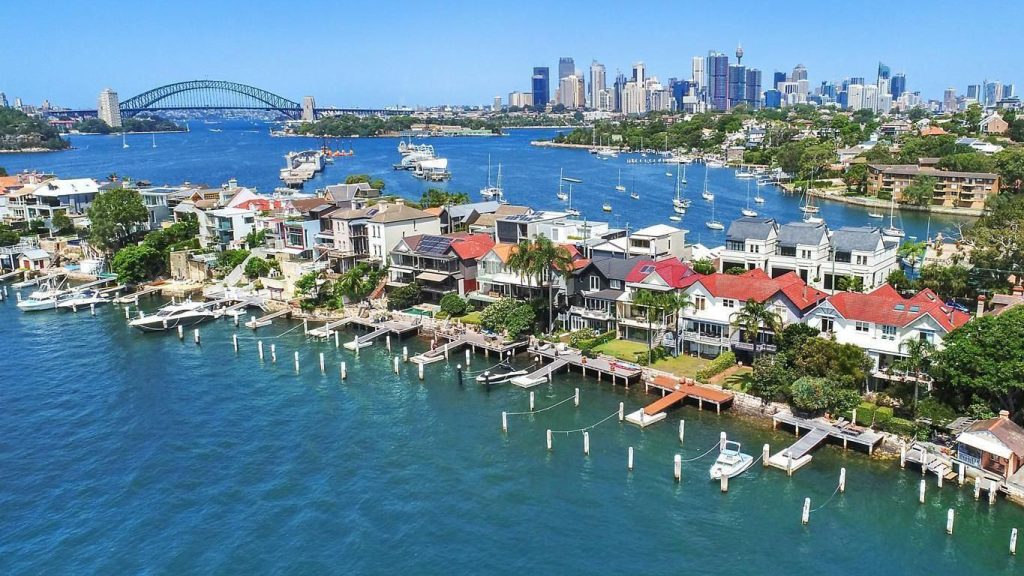
If you’ve looked at anything near Rozelle, Lilyfield, Balmain or Birchgrove lately, you’ve heard some version of: once the Western Harbour Tunnel opens, traffic will finally settle.
Maybe. Maybe not. Big road projects can take pressure off one link and push it somewhere else. That’s why buyers need the unglamorous detail, not just the headline.
So the real question isn’t whether the tunnel is ‘good’ or ‘bad’. It’s which pockets get relief, which pockets get more movement, and how you buy with your eyes open. That’s what this guide is for.

Project snapshot
Transport for NSW describes the Western Harbour Tunnel as a 6.5 kilometre road tunnel that connects the Warringah Freeway near North Sydney to the WestConnex M4 and M8 at the Rozelle Interchange, creating a western bypass of the CBD.
The project is due to open to traffic in 2028.
- A new harbour road crossing, the first in more than 30 years.
- 6.5 km of tunnel from the Warringah Freeway to the Rozelle Interchange.
- Delivered in stages. Stage 1 tunnelling on the southern side ran from 2022 to early 2025, and Stage 2 includes the harbour crossing and tunnel fit out.
- Government project materials have stated expected traffic reductions of 35% on the Western Distributor, 20% in the Sydney Harbour Tunnel, and 17% on the Sydney Harbour Bridge once operational.
Context: why this matters for Inner West buyers
This tunnel isn’t happening in isolation. It plugs directly into the Rozelle Interchange, which opened in late 2023 and has been heavily discussed for its real world traffic impacts.
If you live in the area, you don’t need a report to tell you that some streets have been under pressure. For buyers, that’s the point. The lived experience of local roads has changed, and it may change again as the tunnel comes online.
A buyer framework for road projects
When road planners talk about benefits, they usually mean network level travel time and reduced congestion on key links.
When buyers talk about benefits, they mean whether their street is quieter, whether it’s easier to get in and out, and whether they can park and walk safely.
So we look at three practical movement layers.
Layer 1: Network links (big-picture traffic)
This is where the modelling tends to look good on paper: travel times, harbour crossings, and whether the Western Distributor and Harbour Bridge carry less load.
Buyer move: treat the network benefits as a backdrop, not a guarantee. Local outcomes can still go either way, especially once tolls and real-world driver behaviour kick in.
Layer 2: Arterials (the connectors that feed the network)
These are the roads that can get quieter, or busier, depending on how people re-route. For Inner West buyers, that means watching links like City West Link, Victoria Road, Darling Street and The Crescent.
Buyer move: if you’re buying near an arterial, visit during the school peak and evening peak. That’s when the lived experience shows up.
Layer 3: Local streets (rat-run risk and day-to-day liveability)
This is the part buyers feel in their bones. If a local street becomes a shortcut, it changes the noise, safety, and the feel of the neighbourhood.
Buyer move: look for traffic calming, street width, and whether the street naturally attracts cut-through traffic. Then check it at the times people actually commute.
What we know and what we still don’t know
What we know, and what we still don’t know
There’s a lot of certainty around the engineering and the route, and less certainty around the behavioural outcomes.
That’s normal. Traffic models are useful, but human behaviour is messy.
More certain
- The tunnel connects North Sydney to Rozelle Interchange, and the opening target is 2028.
- Construction and staging will continue to create localised disruption in some areas until completion.
- Major link benefits are the headline objective, including taking pressure off the Western Distributor and harbour crossings.
Less certain
- Exactly how drivers will re-route once tolls, travel times and congestion patterns settle.
- Whether some local streets will become more attractive as shortcuts, especially in the early months after opening.
- How induced demand plays out, meaning some people may choose to drive more because the network feels easier.
Tolls and driver behaviour
Inner West buyers often focus on travel time. The tunnel can change travel time, but tolling can change whether people use it.
We aren’t making a call on toll policy here. The buyer’s point is simple: if a new link is expensive, some drivers will try to avoid it, and that can push more cars onto surface routes.
- Ask yourself whether your street is a natural alternative route between two busy points.
- If you live near a corridor that drivers use to avoid queues, you can feel the downside even if the overall network improves.
- This is why we emphasise watching real movement patterns at peak times, not just reading maps.
Between now and 2028
The tunnel is still under construction. That means there are two separate things to consider: the long term operating state and the short to medium term construction state.
If you’re buying to live in the area over the next two to three years, construction impacts can matter as much as the final outcome.
- Ongoing work zones and periodic changes to local traffic management in some areas.
- Construction noise and truck movement that can be intermittent, which makes it hard to judge on a single inspection.
- Media cycles and community sentiment that can swing, which sometimes creates buying opportunities if you’re comfortable with the reality.
Five rules for buyers
These are the practical rules we use with clients when the location story is complicated.
- Buy for the street first. If the street feels stressful now, don’t assume a future project will fix it.
- Prioritise internal quiet. Bedrooms, glazing and orientation aren’t glamorous, but they matter every night.
- Avoid guessing. Do the on ground checks, and if possible, speak to neighbours about peak period patterns.
- Be conservative with upside. Treat the best case outcome as a bonus, not as the reason the deal works.
- Have an exit plan. If you’re buying an apartment, make sure the building appeals to owner occupiers, not just investors.
Pockets to watch
These aren’t predictions. They are areas where we think buyers should do extra homework because the movement story is more complex.
Rozelle and Lilyfield near City West Link and the Rozelle Interchange portals
- You’re close to the core network changes, so you can benefit from faster connections, but you can also be exposed to traffic management changes and ongoing works.
- If you’re sensitive to noise, do the simple test: visit at peak hour and at night. Some noise is constant, some is episodic.
- If you’re buying an apartment, consider how the building deals with air quality, ventilation and balcony usability, not just the floor plan.
Balmain and Birchgrove edges that connect to major routes
- The peninsula’s geography means there are limited ways in and out. Any change to the network can push more cars onto a small number of streets.
- Some streets can become rat run candidates when drivers are trying to avoid queues, even if the overall network is improving.
- If you’re close to a likely movement corridor, check how safe it feels for pedestrians, especially with children.
Annandale and Camperdown edges near Parramatta Road and City West Link
- These areas can feel secondary to the tunnel story, but they often pick up spillover effects during construction staging and network changes.
- If you’re buying near a major corridor, be careful with assumptions about future quietening. Relief is possible, but it depends on final traffic patterns and driver behaviour.
Common risks for buyers
The biggest risk is buying into a story that’s true at a broad level, but wrong for your street.
- Assuming traffic will fall everywhere. Traffic shifts. Some streets get quieter, some get busier.
- Ignoring the timeline. 2028 is a target opening date, and large infrastructure projects can slip.
- Buying on a main road because it looks cheaper, without pricing in long term noise and air quality trade offs.
- Treating travel time savings as a guaranteed value uplift. Desirability is real, but it’s only one input into pricing.
Buyer questions
These are the common questions, and the grounded way we answer them.
Should I buy near Rozelle Interchange now?
- It depends on whether you value access enough to accept uncertainty and disruption. If you’re buying for calm, it’s usually safer to step back a few blocks.
- If you’re buying for connectivity, we look for pockets with good access but less exposure to the main movement funnels.
Will the tunnel reduce rat running in Rozelle and Balmain?
- It can help, but it isn’t guaranteed. If surface congestion eases, some shortcuts become less attractive. If tolls are high or bottlenecks remain, shortcuts can persist.
- The safest approach is to judge the street on how it behaves today, and treat future relief as possible upside.
Does this make Inner West suburbs more desirable long term?
- Better connectivity can support desirability, but it’s only part of the story. Schools, housing supply, interest rates and broader city planning matter.
- We don’t buy based on a single project. We buy based on the whole livability package.
Due diligence checklist
Due diligence checklist for buyers near major road projects
- Inspect with movement in mind. Watch where cars actually queue, and where they divert.
- Visit twice. One weekday peak, one weekend afternoon.
- If you’re near an arterial, check bedroom orientation and glazing. Quiet bedrooms matter more than marketing finishes.
- Ask about planned road changes in the local area, including intersection upgrades and signal changes.
- Consider air quality and ventilation, especially for apartments and homes with outdoor living facing a corridor.
- Be honest about your own driving patterns. If you rarely drive, the tunnel might matter less than walkability and noise.
How we approach it
When clients ask whether to buy near Rozelle Interchange now, we start with a simple question: Are you buying the location because you want the access, or are you tolerating the location because it’s cheaper?
If you genuinely want access, we hunt for streets that benefit from connectivity but sit just outside the worst movement funnels.
If you’re tolerating it, we look for alternatives. There’s no point buying stress into your daily life for a marginal discount.
Further Reading
- Transport for NSW, Western Harbour Tunnel project overview (open in 2028): https://caportal.com.au/rms/wht/about
- NSW Government ministerial release, Light at the end of the Western Harbour Tunnel (24 Mar 2025): https://www.nsw.gov.au/ministerial-releases/light-at-end-of-western-harbour-tunnel
- NSW Government media release, Digging deep to build Sydney’s Western Harbour Tunnel (17 Jul 2024): https://www.nsw.gov.au/media-releases/digging-deep-to-build-sydneys-western-harbour-tunnel
- Transport for NSW media release, Rozelle Interchange is now open (1 Dec 2023): https://www.transport.nsw.gov.au/news-and-events/media-releases/rozelle-interchange-now-open
- The Guardian, parliamentary inquiry criticises Rozelle Interchange impacts (15 Jul 2024): https://www.theguardian.com/australia-news/article/2024/jul/15/rozelle-interchange-sydney-inquiry-traffic-planning
Kevin Parker is a Sydney buyer’s agent and the founder of Parker Hadley, helping owner-occupiers and investors buy with calm, evidence-based advice. Based in the Inner West, Kevin supports clients across Rozelle, Balmain, Leichhardt, Annandale, Glebe and the broader Sydney market. If you want a clear plan before you bid, we can help.