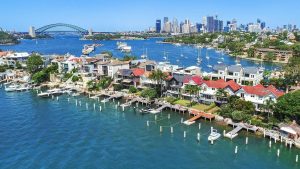
If you live around Rozelle or Balmain, you’ve probably heard people talking about “The Bays” for years.
White Bay. Glebe Island. The Power Station. The “new waterfront”. A Metro station.
It’s one of those city-shaping precincts that sits just close enough to feel relevant, but large enough (and slow enough) that it’s hard to know what’s real, what’s marketing, and what’s still a decade away.
So let’s talk about it.
Not as hype.
Not as a sales pitch.
But, as a grounded conversation starter for anyone buying in and around Rozelle / Balmain / Lilyfield, or anyone thinking about the long-term impact of precinct renewal on how a neighbourhood lives and feels.
Because The Bays forces a bigger question that’s worth asking before you pay a premium for proximity:
- Are you buying today’s lifestyle… or are you paying for a future narrative?
- And if you are paying for the future, how much of that future is actually knowable?

What “The Bays Precinct” actually is (in plain English)
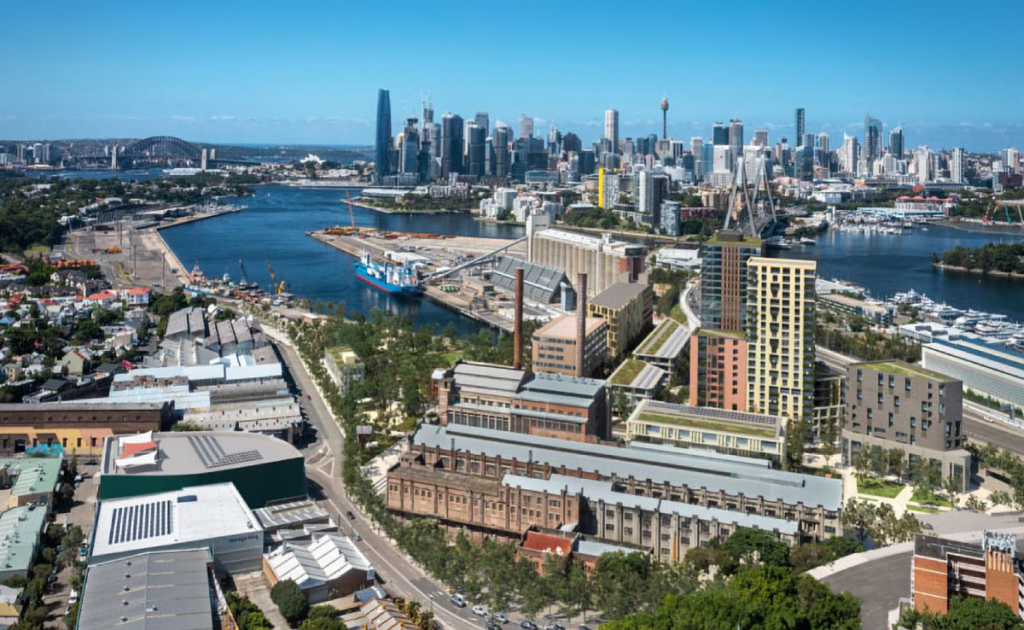
The Bays Precinct is a large stretch of government-owned waterfront land about 2km west of the Sydney CBD.
It includes a handful of sub-areas you’ll recognise: White Bay, Glebe Island, Rozelle Bay, and the White Bay Power Station.
The bit most Inner West buyers keep circling back to is Bays West, because that’s where the next major transport piece lands.
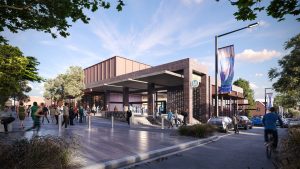
The Bays Metro Station (Sydney Metro West)
Sydney Metro West is targeting an opening date of 2032, and The Bays Station is part of that plan.
It’s planned between Glebe Island and White Bay Power Station, with direct access to a future waterfront promenade running along White Bay.
That matters because rail changes how an area functions, not just for commuters, but for retail viability, walkability, visitor traffic, and the way people choose where they live.
But (and this is important) it also means:
- The timeline is long
- The staging will be messy
- And a lot of the detail will evolve between now and then
Why The Bays has so much attention in Rozelle & Balmain
Most precinct redevelopments get attention for the same reason: they change the story of a pocket.
For a long time, this part of the harbour edge has been industrial, fenced, underutilised, or simply “not for people”.
If the long-term vision lands well, The Bays could do a few meaningful things for the Inner West:
- Add new public waterfront access
- Create new places to walk, eat, meet, and spend time
- Reuse heritage assets like the Power Station
- And connect this whole edge of the city into something more liveable and legible
That kind of change doesn’t guarantee price growth. Nothing does.
But it can genuinely change how an area feels day to day, and that does influence demand, especially in lifestyle-led suburbs like Rozelle and Balmain.
The key is understanding which parts of the Inner West will feel those changes as a benefit… and which parts will feel them as friction first.
The real buying question: what are you actually paying for?
When buyers tell me they want to buy “near The Bays”, it usually falls into one of three mindsets:
- Lifestyle-first
“I love this pocket, I want to live here long term, and I like the idea of better transport + waterfront access over time.” - Future-first
“I want to get in before the Metro/precinct uplift changes the area.” - Fear-first
“I don’t want to buy somewhere that gets ‘left behind’ when the next big thing happens nearby.”
None of those is inherently wrong.
But they’re very different reasons to buy, and they require different decisions.
Because here’s the truth: most people don’t slow down enough to sit with:
The closer you buy to a major renewal precinct, the more your outcome depends on staging, delivery, and how the “real version” of the precinct lands.
And that is never as clean as the early render.
What we know (and what we don’t) and why it matters
There are a few things that are relatively clear:
- The precinct is real, and planning is underway
- Stage 1 rezoning around the future Metro station and White Bay Power Station has been finalised
- Sydney Metro West is targeting 2032 for opening
- The area is expected to evolve in stages over many years
What we don’t know (and this is where buyers can get exposed) includes things like:
- The exact built form outcomes across every sub-area
- How quickly each stage is delivered
- What happens with existing working harbour / port-related uses over time
- The eventual balance of homes vs commercial vs cultural uses
- How pedestrian access truly works on the ground (not on a map)
If you’re buying a family home in Balmain with a 10–15 year horizon, the uncertainty might not matter much.
If you’re paying a premium for “future uplift” on a shorter hold period, the uncertainty matters a lot.
Why buying near a mega-precinct can make sense
When it works, buying near a precinct renewal can be logical, especially for owner-occupiers.
Some of the genuine upsides are:
- Transport optionality: even if you don’t plan to commute daily, stations change the accessibility of an area
- Amenity lift: better public realm, better walkability, better places to spend time
- Heritage reuse done well can become a real cultural anchor (and yes, that has flow-on effects)
- Neighbourhood “energy” changes: more street life, more activation, more reasons to be out locally
If someone says to me:
“I want to live in this pocket long term, and I’m comfortable with the transition period.”
…then “buying near The Bays” can make sense.
But only if you also acknowledge the other side of the equation.
The risks buyers need to be honest about
This is the part that gets skipped when the conversation is all upside.
1) Timeline risk (2032 is not “soon”)
If the Metro is a key part of your thesis, you need to hold long enough for it to actually arrive, and then long enough for the area to normalise afterwards.
Precinct renewals don’t flip like a switch. There’s often a long, awkward middle stage.
2) Construction reality (the “disruption premium” is real)
Noise, dust, truck movements, detours, access changes — these aren’t deal-breakers, but they’re not nothing either.
Some buyers underestimate how much this affects day-to-day livability, especially if you work from home or you’re buying an apartment close to a construction zone.
3) “Temporary forever” staging
A lot of renewal precincts spend years in a half-finished state.
It’s not a failure, it’s just how large government-led precincts tend to evolve.
But if you’re paying a premium because you want the finished version, you need to be comfortable living through the in-between version.
4) Supply risk (especially if you’re buying apartments)
Where new precincts introduce new housing, there can be waves of similar stock hitting the market over time.
That doesn’t mean prices fall. It does mean resale can be more competitive, especially if your apartment isn’t clearly differentiated (aspect, light, privacy, layout efficiency, parking, storage).
5) Micro-pocket risk (the impact won’t be evenly distributed)
This is the big one.
People talk about precincts as if they lift all nearby boats equally.
In reality, the effect is uneven:
- some streets become more desirable because they get better access and amenity
- some streets carry more traffic and friction
- some pockets feel unchanged (and that can be a good thing)
- some properties lose privacy or outlook as the surrounding built form changes
The right way to assess “The Bays impact” is not suburb-wide.
It’s street-by-street.
The “Bays” checklist I run buyers through
If you’re buying in and around Rozelle / Balmain with The Bays in the background, these are non-negotiables:
- Your hold period is defined (be honest: 3–5 years is different to 10–15)
- Walkability tested in real life (not just Google Maps)
- Noise and activity patterns assessed (weekday vs weekend, day vs night)
- Traffic exposure understood (especially near key routes and access points)
- Comparable sales evidence analysed (not just asking prices)
- If it’s an apartment: layout efficiency, light, privacy, strata fundamentals
- Supply pipeline considered (what else will settle nearby, and when?)
- Resale buyer psychology is considered (who will buy this from you later?)
- You’re not relying on “the precinct will fix it” to justify compromises you don’t actually like today
This isn’t about being pessimistic.
It’s about not making a “vibes-only” decision with a big chunk of your net worth.
So… is buying near The Bays a good idea?
The honest answer is the same one I give clients every week:
It depends on what you’re buying it for.
If you’re buying a home you genuinely like today, in a pocket you’d happily live in even if nothing changed, and you plan to hold it, then the Bays story can be a tailwind, not the whole thesis.
If you’re buying primarily because you expect a clean, fast, guaranteed uplift as the Metro and precinct land, that’s where people get uncomfortable.
Sometimes these projects exceed expectations.
Sometimes they take longer.
Sometimes they change in ways the early story didn’t predict.
None of that is failure, as long as your decision matches your goal and your timeline.
Where a buyer’s agent fits into a precinct story like this
Good buyer advocacy isn’t anti-development.
It’s pro-clarity.
My job in “precinct-adjacent” purchases is usually:
- pressure-testing the premium you’re paying for proximity
- mapping the real micro-pocket pros and cons
- comparing real alternatives (including “quiet pockets” nearby)
- translating planning reality into practical risk
- making sure you’re not relying on hope
- and keeping the decision grounded, not emotional
The aim isn’t to talk people out of buying near The Bays.
It’s to make sure they do it with eyes open, and a plan they genuinely feel calm about.
Final thought
The Bays Precinct is one of the biggest long-horizon changes coming to the Inner West waterfront.
It could improve access, amenity, and connectivity in a way that genuinely benefits pockets of Rozelle and Balmain.
But property decisions are personal. And the best buys are rarely made by chasing narratives.
They’re made by choosing the right asset, in the right micro-location, for the right time horizon, and understanding the trade-offs.
If you’re buying in Rozelle, Balmain, Lilyfield or nearby and want a grounded view on how The Bays might (or might not) matter for your specific purchase, I’m always happy to have that conversation.
Kevin Parker is a Sydney buyer’s agent and the founder of Parker Hadley, helping owner-occupiers and investors buy with calm, evidence-based advice. Based in the Inner West, Kevin supports clients across Rozelle, Balmain, Leichhardt, Annandale, Glebe and the broader Sydney market. If you want a clear plan before you bid, we can help.