Let’s be honest, moving the Fish Market was never going to be a quiet little change. It’s a big new building, a big visitor drawcard, and it’s landed right on the edge of Glebe and Pyrmont.
If you’re buying in Pyrmont, Glebe, Forest Lodge, Annandale or even parts of Leichhardt, you’re now dealing with two overlapping stories at once: the new market precinct at Blackwattle Bay, and the redevelopment of the old market site on the Pyrmont side.
This isn’t a price prediction piece. I don’t do crystal balls. It’s a buyer’s guide: what changes, what doesn’t, where the upside is, where the friction is, and what to check before you commit.

What has actually changed at Blackwattle Bay
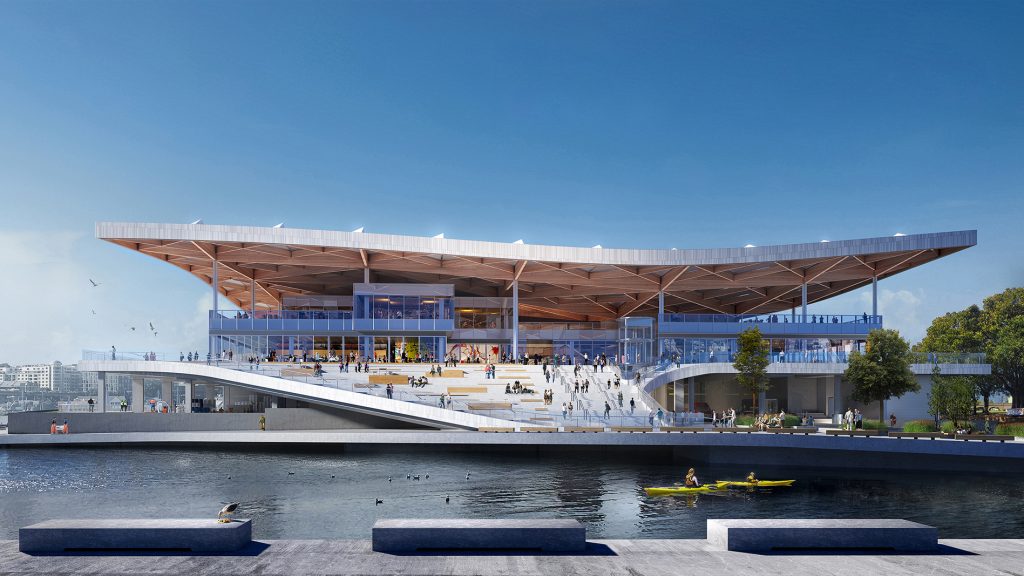
The NSW Government and Infrastructure NSW have positioned the new fish market as part of a broader Blackwattle Bay renewal. The new facility is larger than the old Pyrmont site, with a bigger public domain footprint and a clear intent to turn the bay into a waterfront destination rather than an industrial edge.
A few headline facts worth knowing:
- The new Sydney Fish Market opened on Monday 19 January 2026.
- It includes more than 6,000 square metres of public open space and is expected to attract more than 6 million visitors a year.
- The market has double the retail space of the former site, with more than 40 food and retail operators.
- Relocating the market allows a new waterfront promenade to connect a continuous 15 km harbour walk from Rozelle Bay to Woolloomooloo.
Getting there, and why it matters for buyers
For buyers, access and movement matter as much as the building itself. The market will change pedestrian flows, weekend traffic and the way visitors enter and leave the precinct.
Transport for NSW has been very clear on the practical point: public transport is the easiest way to get there, and light rail stop naming has been adjusted to reduce confusion.
- Wentworth Park is the closest L1 light rail stop, roughly a 400 metre walk to the new market.
- The existing Fish Market light rail stop is being renamed Bank Street, because it’s no longer the closest stop to the market.
- Existing bus routes that run through the area continue to provide access, and there are plans for more services timed around peak visitor periods.
The old fish market site redevelopment, and why it matters just as much
The second story is the old fish market site, which sits directly across the bay from the new building.
In December 2025, Infrastructure NSW announced Mirvac as the preferred developer for the redevelopment of the existing Sydney Fish Market site. That matters because it signals the shift from concept to delivery pathway. The detail also matters because it sets expectations for future density, public space, and construction disruption.
Here is what the Blackwattle Bay project team has said the redevelopment is intended to deliver:
- Around 1,400 new homes, including student accommodation, plus a financial contribution that enables around 100 new affordable homes to be delivered by the City of Sydney.
- A new boardwalk between Sydney Fish Market and Bank Street Park, filling a missing link in the 15 km Harbour Walk.
- A 30 metre wide public foreshore promenade and more than 50% of the site accessible to the public, with an ambition for an outdoor living room for the community.
- New commercial and retail spaces designed to complement the new market, not compete with it.
Pros and cons buyers should hold together
When a precinct becomes a destination, the positives and negatives come as a package. The trap is pretending it’s only upside, or only downside.
Pros
- Better waterfront access and public space, especially as the harbour walk links become more complete.
- More day to day amenity, food options and activation. That generally supports long term desirability.
- Improved public transport planning around the precinct, including extra light rail services and committed upgrades to nearby stops.
- A stronger story for renters who value walkability and lifestyle.
Cons
- Crowds and peak period traffic, particularly on weekends and during holiday periods.
- Parking pressure in nearby streets, especially if you rely on visitors parking or don’t have off street parking.
- Construction fatigue, because the old market site and related public works will take years, not months.
- More short stay style visitation in the immediate precinct, which can affect some apartment buildings.
A buyer’s way to think about the timeline
From a buyer’s perspective, this is best thought about in three time horizons.
Time horizon 1: Right now (opening and settling in)
The first few months after opening are when behaviour is at its messiest. People are working out where to park, which stop to get off at, and what a weekend looks like when six million visitors a year is the ambition.
Buyer move: do at least one inspection on a weekend, and one at commuter peak. You’re trying to understand parking pressure, pedestrian noise, and whether your building gets the overflow.
Time horizon 2: The old fish market site redevelopment (construction, supply, disruption)
This is the bit that gets missed. The new market is the shiny headline. The old site is the long, slow change that can reshape views, traffic routes, and apartment supply on the Pyrmont side.
Buyer move: check likely construction access routes, ask what can be built in front of you, and treat any ‘protected view’ claims with healthy scepticism until you’ve checked the planning controls.
Time horizon 3: The longer game (foreshore access, walkability, Metro West)
Over time, the real value is in the public realm. Better foreshore access, a more continuous harbour walk, and eventually the broader transport network upgrades in this part of the city.
Buyer move: if you’re buying for lifestyle, focus on what improves day-to-day (walks, parks, getting to the city) more than one-off destination hype.
Which pockets feel the upside, and which pockets feel the friction
Not every nearby street experiences this in the same way. The buyer’s question isn’t if the fish market is good or bad. The question is, where will the benefits land, and where will the drawbacks concentrate.
Here are the pockets we’re watching most closely.
Pyrmont, west of Harris Street
- Convenience improves over time, especially if the harbour walk and foreshore connections become more continuous and usable day to day.
- The trade off is visitor pressure on weekends, particularly where on street parking already runs tight.
- For apartments, pay attention to outlook and noise, not just distance. A property that looks toward the waterfront activation may feel very different to one that’s one block back.
Glebe and Forest Lodge, around Bridge Road and Wentworth Park
- This is the edge most directly influenced by the new building, because it’s where people arrive and walk in.
- Light rail is a plus, but it can also concentrate foot traffic. If you’re close, check what the street feels like on a Saturday late morning, not just a weekday inspection.
- Noise isn’t only in the market itself. It’s also loading, deliveries, early starts, and the general hum of an active precinct.
Annandale and Camperdown, closer to City West Link
- You may not feel the market day to day, but you may feel the cumulative change of traffic patterns as the precinct matures.
- If you’re buying near major arterials, do the simple check: stand outside at 7am and 7pm. The lived experience matters more than the marketing.
What this means for different buyer types
Different buyers experience the same project differently. Here is how we frame it.
First home buyers in apartments
- Focus on owner occupier appeal. Good natural light, usable layout, low noise bedrooms and a building with solid management matter more than being closest to the action.
- Assume the new apartment supply will arrive near the waterfront over time. That makes differentiation important.
Upgraders and young families
- Walkability and parks can be a real win, but you need to test school drop off routes, weekend parking and whether your street becomes a shortcut for visitors.
- If you’re near a corridor, buy for quiet internal bedrooms and a backyard orientation that feels private.
Downsizers
- This precinct can be appealing if you want a walkable lifestyle, but you should be realistic about crowds. Some people love the buzz. Others find it exhausting.
- Prioritise lift access, secure parking and a layout that works long term.
Investors
- Treat this as a long term desirability story, not a quick rent spike. New supply and construction disruption can both cap short term growth.
- Look for stock with owner occupier demand so you have more options when you exit.
What to watch as plans become real
There are two planning threads that can materially change the feel of nearby property.
First, the redevelopment of the old fish market site will involve building heights, view impacts, wind and shadow studies, and a staged construction program. These details will shape which nearby apartments keep their outlook and which lose it.
Second, Sydney Metro West includes a future Pyrmont Station, and Sydney Metro has explicitly positioned it as being on the doorstep of Blackwattle Bay and the new fish market. Long term, that level of connectivity usually supports jobs and activity, but it also intensifies development interest.
- If you’re buying an apartment for its view, check whether that view is protected, or whether it relies on no one building in front of you.
- If you’re buying close to the old site, ask what stage the works are in, and what the likely heavy vehicle access routes are.
- If you’re buying for quiet, pay attention to the direction your bedrooms face, and whether you can close off outdoor space on high activity days.
- Be careful with future transport assumptions. Metro West is targeting an opening date of 2032, which is meaningful, but it isn’t next year.
Investor lens: demand is real, but so is new supply
For investors, the question is usually, will this lift rents, will it create more demand, and will it improve long term desirability.
It can, but it also comes with a supply story. A pipeline of new apartments, student accommodation and build to rent style stock can soften rental growth in the immediate catchment, even while the precinct improves.
So the investor lens should be: which product stays scarce, and which product becomes more common.
- Scarcity tends to sit with well located family homes and character terraces, because they are limited by zoning and existing street fabric.
- Supply tends to increase in newer apartment formats, especially close to major corridors and new public domain projects.
- If you’re buying an apartment, ask yourself what makes this one different. Aspect, outlook, layout, building quality, and owner occupier appeal all matter.
Owner occupier lens: lifestyle uplift, and peak period reality
For owner occupiers, this is mostly about lifestyle and liveability. The upside is obvious: better foreshore access, more places to walk, eat and spend time. The downside is also obvious: crowds, traffic and noise during peak periods.
If you’re within walking distance, treat this like buying near any major destination. It’s a positive if you’ll actually use it. It’s a negative if it will be mostly other people using it while you’re trying to park and get home.
Due diligence checklist
- Inspect at two different times, including a weekend late morning.
- Walk the likely route you’ll take to the light rail or buses, and note where foot traffic bottlenecks.
- Check parking conditions. If you rely on on street parking, you need to see what it’s like when the precinct is busy.
- If you’re in an apartment, ask about loading and delivery rules, and whether short stay style usage is common in the building.
- Map the redevelopment sites you may be exposed to, and assume construction will take longer than the optimistic timeline.
- If you’re sensitive to noise, stand still and listen. The bay carries sound differently to a normal street.
How we approach it
We try to separate hype from signal. Big civic projects can lift the quality of a place, but they can also create friction in very specific micro pockets.
Our job is to help you buy the right street and the right product within that story. Not just the suburb name. Not just the marketing narrative.
Further Reading
- Infrastructure NSW, New Sydney Fish Market Grand Opening (19 Jan 2026): https://www.infrastructure.nsw.gov.au/news/new-sydney-fish-market-grand-opening/
- Transport for NSW, Getting to the new Sydney Fish Markets (5 Jan 2026): https://transportnsw.info/news/2026/getting-to-new-sydney-fish-markets
- NSW Government ministerial release, More L1 services and funding for ferry and stop upgrades (20 Nov 2025): https://www.nsw.gov.au/ministerial-releases/getting-line-set-for-new-fish-market-more-l1-services
- Transport for NSW, Wentworth Park Light Rail stop upgrade project page (2026): https://www.transport.nsw.gov.au/projects/current-projects/wentworth-park-light-rail-stop-upgrade
- Blackwattle Bay, Preferred developer announced (9 Dec 2025): https://blackwattlebay.insw.com/news-and-updates/preferred-developer-announced/
- Mirvac, Blackwattle Bay preferred proponent announcement (9 Dec 2025): https://www.mirvac.com/about/news-and-media/mirvac-announced-as-preferred-proponent-to-deliver-blackwattle-bay-sydney
- Sydney Metro, Sydney Metro West project overview (target opening 2032): https://www.sydneymetro.info/west/project-overview
- ABC News, What to know about the new Sydney Fish Market (18 Jan 2026): https://www.abc.net.au/news/2026-01-19/what-to-know-about-new-sydney-fish-market/106225622
Kevin Parker is a Sydney buyer’s agent and the founder of Parker Hadley, helping owner-occupiers and investors buy with calm, evidence-based advice. Based in the Inner West, Kevin supports clients across Rozelle, Balmain, Leichhardt, Annandale, Glebe and the broader Sydney market. If you want a clear plan before you bid, we can help.