If you’ve lived anywhere near Parramatta Road for long enough, you’ve heard the descriptions.
“A traffic sewer.”
“A varicose vein.”
“Like driving through Beirut on a bad day.”
(all by former NSW Prem Nick Greiner LOL!)
None of them are flattering. And for a long time, none of them were wrong.
But a recent Sydney Morning Herald piece laid out something that’s easy to miss if you only look at the road and not the planning behind it: Developers are now committing billions of dollars to build along the corridor.
Not proposals. Not ideas. Actual, approved, funded, and lodged projects.
And that’s the part buyers need to pay attention to.
Because this isn’t an infrastructure story, it’s a buyer risk map story.

What’s actually happening (in real terms)
Across the 23km stretch of Parramatta Road, analysis of NSW Planning data shows:
- ~$2.7 billion in proposed and approved developments
- 6000+ new apartments already in the pipeline
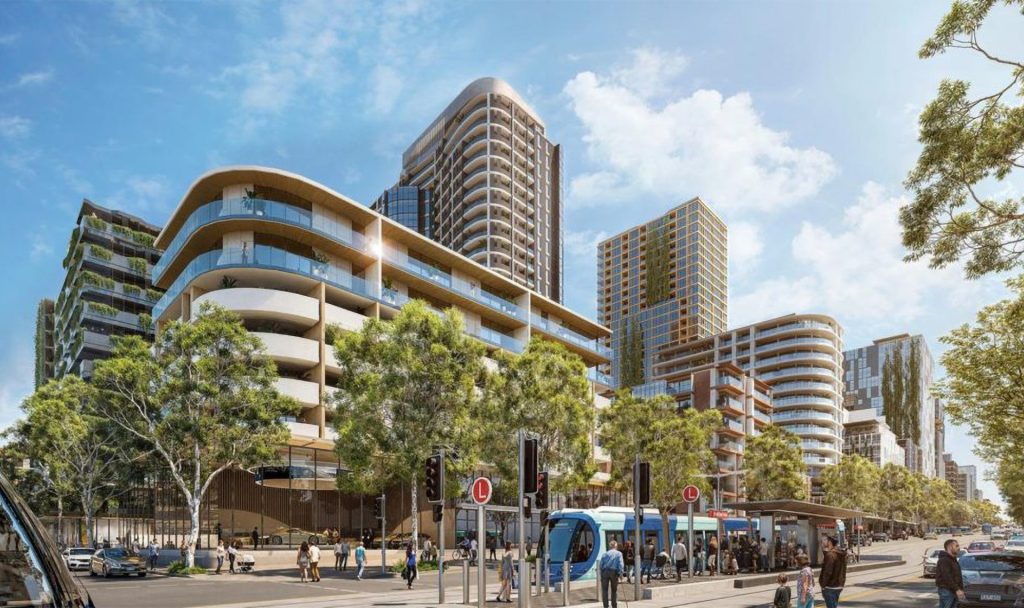
- Buildings up to 30–35 storeys
- Old petrol stations, car yards, tired shopfronts and dive sites, turning into towers
- A surge of build-to-rent and co-living projects aimed at students and young professionals
- Major activity around Annandale, Leichhardt, Five Dock, Burwood North
This isn’t happening because developers suddenly “like” Parramatta Road.
It’s happening because the government has finally done the thing that matters:
They changed the zoning and height controls.
For years, the Parramatta Road Urban Transformation Strategy sat in the background. Now the planning controls allow buildings tall enough to make development viable.
That’s the difference.
Why this matters to buyers (and why most will read it wrong)
Most buyers will read this as “Parramatta Road is improving, prices will go up nearby.”
That’s not how this works.
The reality is far more nuanced and far more important if you’re buying anywhere within 500–800 metres of the corridor.
Because this type of change does three things at once:
- It introduces a lot of new housing supply
- It changes how the street network and pedestrian life works
- It changes who lives in the area
And those three things land unevenly, street by street.
The first real example: The WestConnex dive site at Annandale
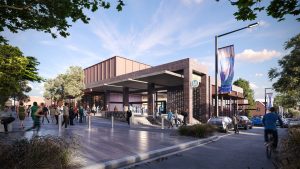
On the corner of Pyrmont Bridge Road and Parramatta Road in Annandale, a former WestConnex tunnelling site is being turned into:
- a 21-storey build-to-rent tower
- ~220 apartments
- ground level activation
- a pedestrian plaza and public domain
Across the road, old shopfronts are being demolished to make way for a 22-storey tower with 281 units.
This is the pattern you’ll see repeated.
Government land and large awkward sites go first. Then the surrounding low-rise retail strips become “viable”.
And that’s where buyers start to get caught.
Parramatta Road is not one market. It’s a patchwork of micro-pockets.
You can stand on one street and benefit from:
- better cafés
- better footpaths
- more life
- more convenience
Walk 150 metres, and another street will feel:
- busier
- louder
- more parked out
- overshadowed by taller buildings
Both are “near Parramatta Road.”
Only one feels good to live in.
That’s the part no headline explains.
What lifts value near corridors like this (and what quietly hurts it)
When it works well (tailwinds)
Walkability improves
When tired retail turns into useful retail, owner-occupier demand rises.
Tenant profile strengthens
Near RPA, universities, and the city edge, new housing attracts young professionals and essential workers. That can be a durable rental market.
Public domain improves
When crossings, footpaths, and small plazas arrive, nearby side streets feel more connected.
When it works badly (headwinds)
Construction lasts for years
You may live next to a site for 3–6 years before you see the benefit.
New apartments compete with old apartments
If you own a generic 1980s unit with no light, no aspect, no parking, and hundreds of new apartments arrive nearby, your resale and rental story gets harder, not easier.
Built form changes light and privacy
You don’t need to be on Parramatta Road to be affected. Height changes at the end of your street can change how your home feels.
Traffic patterns change
As more residents arrive without matching transport upgrades, parking and congestion move into neighbouring streets.
This is already a concern raised publicly: the housing is coming faster than public transport upgrades to support it.
The “Leichhardt example” where locals are pushing back
In Leichhardt, residents have objected to a 7-storey development on Renwick Street, citing:
- traffic impacts
- overshadowing
- loss of local culture and small businesses
They’re not wrong to be concerned.
But the developer is also not wrong when they say Parramatta Road is overdue for change in the middle of a housing crisis.
Both things are true.
And that’s exactly why buyers need to think carefully.
Because this tension is the story of the next 10 years along the corridor.
The Metro factor (and why Five Dock / Burwood North are different)
The largest developments are clustering around the new Sydney Metro stations at Five Dock and Burwood North.
That’s not accidental.
Developers will always chase transport certainty.
One example alone: an $805m development with 1185 units across six towers up to 30 storeys in Five Dock.
This is where the corridor will feel most like a “new centre” over time.
But again, not every nearby street benefits equally.
Owner-occupiers: how to buy smart near Parramatta Road
If you’re buying a home, ask yourself: “Do I want to use Parramatta Road… or do I want to benefit from it without feeling it?”
Most people want the second.
So you should be looking for:
- tree-lined side streets that are 2-4 turns away from the road
- streets with existing character and good housing stock
- locations where you can walk to the improved amenity, but sleep away from the noise
- homes with good light and privacy that won’t be compromised by future height nearby
And you must accept that for the next few years, this area will be in transition.
Investors: where the opportunity is (and where it’s risky)
What works well
- Houses or boutique blocks slightly off the corridor
- Assets with genuine scarcity (light, layout, parking, outdoor space)
- Stock that suits the tenant profile (young professionals, hospital staff, students)
What to be careful with
- Generic older units on or directly facing Parramatta Road
- Buying purely because “the area is changing”
- Ignoring the supply pipeline and who you’re competing with in 5 years
Because when 6000 new units arrive, “average” becomes a liability.
The practical checklist we use near Parramatta Road
If we’re assessing a property near the corridor, we’re checking:
- Noise levels at multiple times of the day
- Walking routes: do they feel good, or just convenient?
- Planning controls and likely future height nearby
- Construction sites within 300 metres
- Parking pressure and traffic patterns
- If apartment: natural light, ventilation, aspect, build quality
- If house: overshadowing and privacy risk from future development
- Who the next buyer will be in 5-10 years
The calm conclusion
Parramatta Road is not about to become a leafy village street.
But it is about to become a very different urban environment.
And that creates opportunity, but only for buyers who read the micro-map, not the headline.
Because the winners won’t be the people who buy “near Parramatta Road.”
They’ll be the people who buy the right streets, the right assets, and understand that the next 5-10 years will be a messy, uneven transition before the benefits really show.
If you’re considering buying anywhere in Annandale, Leichhardt, Camperdown, Five Dock, or nearby, this is exactly the kind of map we walk through before you commit, so you’re not guessing. You’re deciding with clarity.
Kevin Parker is a Sydney buyer’s agent and the founder of Parker Hadley, helping owner-occupiers and investors buy with calm, evidence-based advice. Based in the Inner West, Kevin supports clients across Rozelle, Balmain, Leichhardt, Annandale, Glebe and the broader Sydney market. If you want a clear plan before you bid, we can help.