Sydney loves a good path. We’ll queue for a coffee, complain about parking, and then spend our weekends walking the exact same loop like it’s a competitive sport. So when the Inner West finally opens a proper corridor that links two major waterways, it’s worth paying attention.
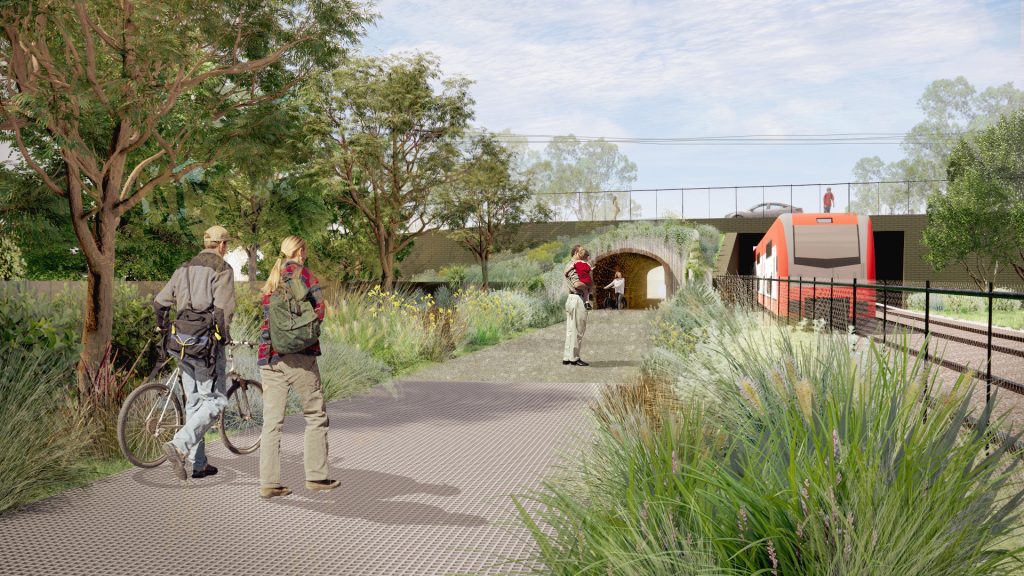
The GreenWay is now open. It links Iron Cove and the Bay Run in the north to the Cooks River in the south, and it mostly follows the Inner West Light Rail corridor and Hawthorne Canal. It’s six kilometres end-to-end, and Inner West Council says it’s about 25 minutes to ride or around 75 minutes to walk one way.
From a buyer’s agent perspective, this isn’t just a lifestyle piece. It’s a walkability and liveability project. Those two things tend to show up in price over time, but only in the right pockets.
Think of the GreenWay like a new spine through the Inner West. Streets that connect cleanly to it often become more desirable. Streets that only touch it awkwardly don’t get the same bump.

Project snapshot
| What is it? | A 6km environmental walking and cycling corridor through the Inner West |
| Where does it run? | Between Iron Cove / Bay Run and the Cooks River Trail at Earlwood |
| What does it follow? | Mostly the Inner West Light Rail corridor and Hawthorne Canal |
| How long does it take? | About 25 minutes to ride, or about 75 minutes to walk (one way) |
| What’s changed recently | The full route from Parramatta Road through Lewisham West and Dulwich Hill to the Cooks River is now open |
| Why it matters to property | Better active-transport connections, safer crossings, and a clearer walkability premium for the streets that use it well. |
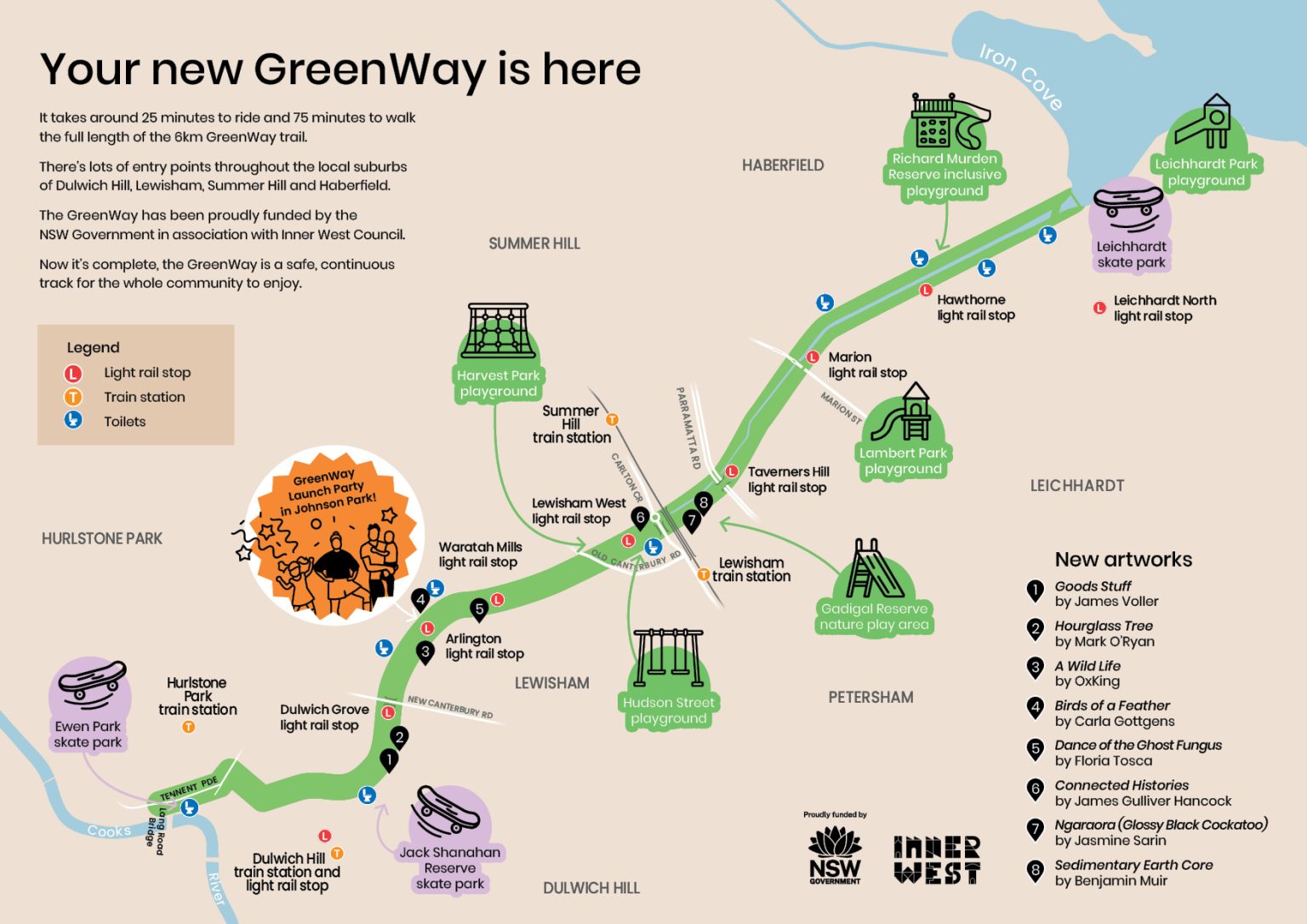
What the GreenWay actually connects
On paper it’s simple. In practice it’s a big stitch job across a part of Sydney that’s been full of fragmented little paths for decades.
- Northern end: Lilyfield Road bridge at the Bay Run (near Leichhardt North light rail).
- It runs through or alongside Leichhardt, Haberfield, Lewisham, Summer Hill, Dulwich Hill and Hurlstone Park.
- Southern end: connections into the Cooks River path network. From there you can keep heading east or west along the river paths, which is how people end up walking/riding all the way toward places like Tempe.
The route includes a mix of shared paths and some on-street sections, plus upgraded crossings like traffic lights at Marion Street and Old Canterbury Road, a zebra crossing at Hercules Street, and new underpasses that make the corridor feel continuous.
Why this matters to buyers (and why it’s not just ‘nice’)
Walkability isn’t a vibe. It’s a daily-life feature. When buyers can walk to parks, cafés, schools, light rail and a safe bike route without playing frogger across major roads, they pay for it.
- It widens the ‘easy living’ zone. Streets that used to feel cut off can suddenly feel connected.
- It makes school runs and errands less car-dependent, which matters more every year as traffic gets worse.
- It increases the value of being slightly off the main strips. You get amenity without noise.
- It strengthens weekend lifestyle. That matters more than people admit when they’re ‘just buying a home’.
- It can support rental demand for tenants who want an active Inner West lifestyle with good transport options.
How the GreenWay can affect property values
Nobody should promise a direct, immediate price uplift. Property doesn’t work like a switch. But there are a few durable mechanisms that tend to show up over time.
- Convenience premium: homes that save time every day usually hold demand better.
- Lifestyle premium: proximity to parks and safe walking/cycling networks matters more as households prioritise health and ‘local living’.
- Amenity pull-through: improved foot traffic can support better local retail and cafés, which then reinforces demand.
- Transport layering: the GreenWay links into light rail stops and train stations, which makes certain pockets more usable without a car.
The key is that it’s uneven. The uplift, where it happens, is pocket-based. The wrong ‘nearby’ location can miss it completely.
Where the GreenWay premium is strongest
In our experience, the strongest buyer pull tends to show up where you have:
- A direct, pleasant access point to the corridor (not a weird detour through back streets).
- A home that’s already liveable and light-filled. The GreenWay doesn’t fix a dark floorplan.
- Low exposure to downsides like rail noise, pinch-point crossings, or low-lying drainage behaviour near the canal.
- A location that still has everyday amenity: shops, cafés, parks, schools, and transport.
Suburb-by-suburb, what buyers often miss
The GreenWay isn’t one uniform experience. It changes feel as you move along it, and that changes what buyers pay for.
- Leichhardt and Haberfield (north end): strong for lifestyle buyers who want Bay Run access and a quick connection down the canal. The trick is finding streets that enjoy the access without the parking chaos on weekends.
- Lewisham and Summer Hill (mid corridor): tends to suit families and couples who want parks, schools, and the ability to walk to light rail stops without relying on a car for every small trip.
- Dulwich Hill and Hurlstone Park (south end): often appeals to buyers who use the Cooks River paths and rail links. Great for active commuting, but you still need to check on-street sections and crossings around your access point.
The downsides buyers should be honest about
- Not every section is fully off-road. There are on-street parts, so check safety and traffic conditions around your access points.
- Some stretches run close to rail infrastructure. Noise and vibration can matter for certain homes, especially at night.
- Parts of the corridor follow the canal. In low-lying areas, understand drainage and flood behaviour in heavy rain.
- More foot traffic is usually a positive, but some streets will feel busier, particularly near key entry points and parks.
None of this is a deal-breaker. It’s just part of reading the map properly.
Owner-occupiers: how to buy with the GreenWay in mind
If you’re buying a home, the GreenWay is mostly a lifestyle tailwind. The trick is to buy a property that can enjoy it without getting the ‘busy corridor’ feeling.
Owner-occupier checklist
- ☐ Walk from the property to the GreenWay and back. Do you actually want to do that walk at night?
- ☐ Check how you’d use it: school run, Bay Run loop, light rail connection, weekend rides. If you won’t use it, don’t overpay for it.
- ☐ Listen for rail noise if the corridor is close. Open windows, morning and evening.
- ☐ Look for homes with good light and privacy. Walkability is great, but you still need a home that feels calm inside.
- ☐ Think about future resale. The next buyer will love the GreenWay, but they’ll still reject a compromised property.
Investors: what it could mean for rental demand
For investors, the GreenWay can be a quiet win. It makes certain pockets more attractive to tenants who want a car-light Inner West lifestyle. That can improve vacancy resilience and, in some cases, support stronger rent over time.
- Target tenants: young professionals, couples and small families who value walkability, light rail access and parks.
- What tends to perform: well-laid-out apartments and small homes in walkable pockets near entry points, cafés and transport.
- What to avoid: assets that rely on one feature only. A mediocre apartment is still mediocre, even if it’s close to a nice path.
A practical ‘GreenWay map’ we’d use before buying
- Find the closest entry point and walk it. If the connection is awkward, the premium is weaker.
- Check the immediate environment: lighting, overlooking, and how busy it gets on weekends.
- Look at the property’s internal liveability: light, ventilation, privacy, storage, and parking (if relevant).
- Check surrounding streets for rat-running and parking pressure.
- If you’re close to Hawthorne Canal, sanity-check drainage and flood mapping. You don’t need to panic, you just need to know.
- Think about the next 5 to 10 years: will this pocket feel more connected, or more congested?
The calm conclusion
The GreenWay is one of those projects that looks simple, but it changes how people use an area. Over time, that usually feeds into demand, and demand is what supports property values.
If you’re buying in Leichhardt, Haberfield, Lewisham, Dulwich Hill, Summer Hill, Hurlstone Park or nearby, it’s worth adding the GreenWay to your mental map. Used well, it’s a lifestyle advantage. Used blindly, it’s just another buzzword people overpay for.
Sources and further reading
- Inner West Council: GreenWay overview and route information (page updated January 2026)
- Inner West Council: Cycling and walking on the GreenWay (timing, crossings and start/finish guidance)
- Transport for NSW: GreenWay map PDF (6km shared walking and riding path from the Cooks River Trail at Earlwood to the Bay Run in Haberfield).
- Bike Network: reporting on the GreenWay opening and project funding (December 2025).
Kevin Parker is a Sydney buyer’s agent and the founder of Parker Hadley, helping owner-occupiers and investors buy with calm, evidence-based advice. Based in Sydney’s Inner West, Kevin has lived in Balmain and Rozelle since 2012 and supports clients across Rozelle, Balmain, Leichhardt, Annandale, Glebe and the broader Sydney market. If you want a clear plan before you bid, we can help.