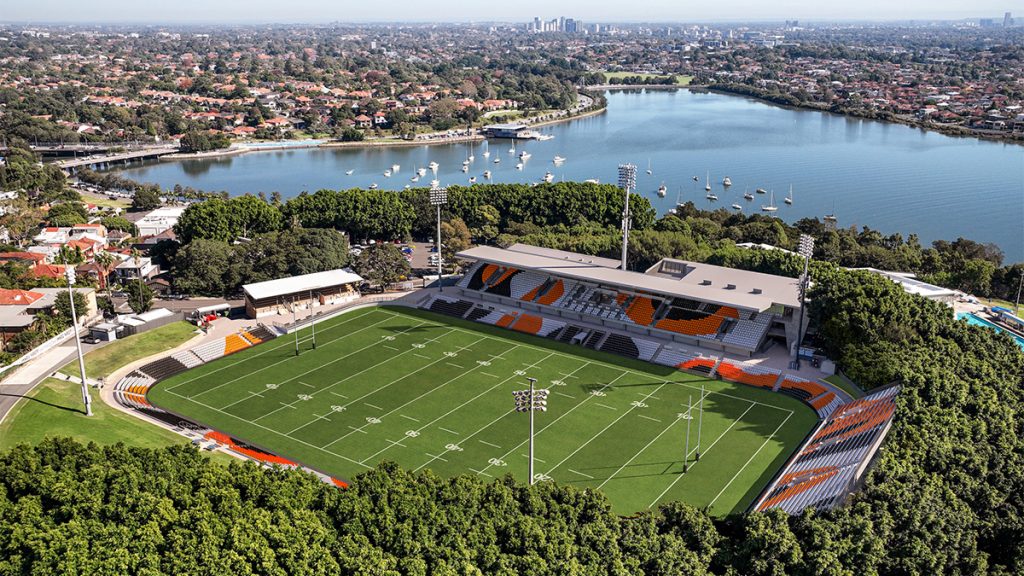
If you’ve lived in the Inner West long enough, you’ve probably heard “the Leichhardt Oval upgrade is coming” more times than you’ve heard the words “I’ll just have one beer.”
So yes, it’s genuinely good to see the project finally get the green light. Leichhardt Oval is one of those places that matters. Even if you don’t go to games, it’s part of the identity of the area.
But here’s the bit buyers need to know. Once a stadium upgrade stops being a rumour and becomes real, it creates a very predictable sequence. Construction first. Then more events. Then more traffic, parking pressure, and people moving through the surrounding streets at times you weren’t used to. Some buyers will love that. Some will hate it. The mistake is not thinking about it until after you’ve bought.
So let’s map it properly, with a calm, buyer-first lens.
Project snapshot
The NSW Department of Planning has outlined the core scope of works and the expected timing.
- A $40 million refurbishment, jointly funded by the Federal Government, NSW Government and Inner West Council.
- Renovation of the historic western grandstand with new stadium seating.
- Modern hospitality and media facilities.
- Four NRL compliant, female friendly change rooms.
- A new northern grandstand and replacement of the lower seating bowl.
- If approved, construction is expected to commence after the 2026 season, with completion targeted for 2028.

Where the project is at right now
In early 2026, the refurbishment is moving through the planning process. NSW Planning has also flagged community input as part of the process, and the current exhibition period runs into February 2026.
If you’re buying close by, it’s worth reading the project page and any publicly available documents, because that’s where you’ll find construction hours, staging, and mitigation details.
Three phases buyers should plan for
Projects like this are rarely a single moment. They are a multi-year change, and the impact shifts over time.
Phase 1: Now to late 2026 (planning and business as usual)
This is mostly about information gathering. Events and local rhythms are broadly the same, but approvals, staging plans and contractor logistics start to firm up.
Buyer move: read the public project updates, and ask vendors what they’ve heard in writing, not what they’ve heard at the cafe.
Phase 2: 2027 (construction year)
If construction kicks off after the 2026 season as expected, 2027 is when disruption is most obvious. Think work hours, truck movements, and temporary changes to access and parking.
Buyer move: check the likely construction entry points, look for streets that become rat-runs, and be realistic about noise if you’re very close to the ground.
Phase 3: 2028 onwards (reopening and busier event nights)
Once it’s back online, the conversation shifts. More capability usually means more usage. That can lift activation and local business, but it can also mean more frequent parking and noise pressure on event nights.
Buyer move: do at least one ‘event night’ walk-through. Stand outside the property. Listen. Watch where people park. It tells you more than any brochure.
Construction reality
If construction commences after the 2026 season as currently expected, 2027 is likely the year when disruption is most obvious.
Even if there are fewer events, there’s still movement. Trades, trucks, site sheds, temporary fencing and occasional road changes can become part of the daily picture.
- Noise that starts earlier than you would like, especially on weekdays.
- Temporary changes to pedestrian routes and parking availability.
- Construction traffic that can push more cars onto nearby streets at peak times.
- A general feeling of visual disruption, which matters if you’re paying a premium for calm.
Event night impacts
People often underestimate how localised event impacts are. A few streets can be calm while one corridor carries most of the crowd and traffic.
Here are the practical things we ask buyers to consider, especially if they are within walking distance.
- Parking restrictions can change on event days, and enforcement can become more consistent as events scale up.
- Ride share pick-up and drop-off points can concentrate noise at specific corners.
- Foot traffic can be positive for local cafes and pubs, but it can also create late night noise on the walk home routes.
- If you have young kids or early mornings, occasional late nights may feel bigger than you expect.
Micro pocket guide
We can’t map every street here, but we can share the patterns we see repeatedly around venues and parks in the Inner West.
- Streets that are close enough to walk, but not on the main vehicle approach routes, often feel calmer day to day.
- Homes with off-street parking are less exposed to event night frustration, especially if you have visitors.
- Bedrooms that face away from the venue and away from arterials can be a bigger quality of life factor than overall distance.
- If you’re buying an apartment, prefer buildings with solid acoustic performance and good separation between living areas and bedrooms.
Where impacts concentrate
In our experience, stadium and venue projects tend to concentrate impacts in predictable ways. If you’re buying nearby, focus on the edges where traffic and pedestrian movement naturally funnel.
Within 300 to 500 metres of the ground
- You’ll feel construction noise and day-to-day movement more directly, especially if your street is part of a truck route or staging area.
- Event nights are a lifestyle factor. Noise, crowds and parking pressure can be fun if you opt in, or a frustration if you don’t.
- For apartments, pay attention to how the building handles visitor parking, loading and security on high activity days.
The Norton Street and Balmain Road corridors
- These routes often become the practical movement corridors on game days and during construction, even when the stadium isn’t the destination for everyone.
- If you buy on a key corridor, don’t rely on a single inspection. You need to see peak hour movement and weekend conditions.
Pocket residential streets that can become rat runs
- During construction, drivers often look for shortcuts around traffic management. That can change a quiet street into a through route.
- It isn’t guaranteed, but it’s common enough that it’s worth checking how your street connects to the broader network.
Common buyer mistakes
Most people either overestimate the upside or overestimate the downside. Both are mistakes.
- Assuming an upgrade automatically means your property value rises. There are too many variables, including broader market conditions, interest rates and supply.
- Ignoring the construction phase because it’s temporary. Temporary can still be two winters, and it can affect your daily routine.
- Buying too close without checking how you personally feel about crowds, noise and parking. This is lifestyle, not just economics.
Investor considerations
Upgraded venues can lift rental demand for some tenant profiles, but it isn’t universal.
If your property appeals to long term tenants who value calm, too much event activity can be a negative. If your property appeals to tenants who love a walkable lifestyle and local nightlife, it can be a positive.
- Avoid relying on short stay usage as a strategy. Regulations and building rules can change, and they’re rarely stable.
- Aim for owner occupier grade apartments and houses. They generally hold value better in changing conditions.
- If you’re buying an apartment, check the building’s stance on visitor management, security and noise complaints.
Where the upside can be real
There are real upsides for liveability if the upgrade is delivered well. Better facilities can attract better events, improve local activation and support nearby hospitality. It can also strengthen the identity of the area, which matters in a place like the Inner West.
Just keep it grounded. Upside is usually a gradual improvement in desirability, not an overnight jump.
Questions buyers keep asking
These are the common questions we hear, answered as plainly as we can.
Will this make prices go up nearby?
- It can support desirability over time, but it doesn’t guarantee price growth. Market cycles and interest rates matter more in the short term.
- If there’s an uplift, it’s usually gradual and it lands unevenly by street and property type.
Is it better to buy during construction?
- Sometimes. If a seller is nervous about disruption, you can occasionally buy well.
- But only do this if you’re comfortable living through the works, or you have a holding plan that makes sense.
How far away is far enough
- There’s no universal number, but for many buyers, 500 to 800 metres is a sweet spot. Close enough to walk, far enough to avoid the worst parking pressure.
- The bigger variable is whether your street is on a natural movement route.
Due diligence checklist
Check the proposed construction timing and staging, and assume it can slip.
- Ask where construction vehicle access is expected, and whether your street is near a likely route.
- Inspect on a match day if you’re within walking distance. If you can’t, at least visit the area on a weekend afternoon and evening.
- If you rely on street parking, look for existing parking permit zones and any event day restrictions.
- If you’re buying an apartment, ask about security and visitor access arrangements on high activity nights.
- Consider your own tolerance for noise and foot traffic. There’s no right answer, but you should be honest.
How we approach it
We treat this as a micro pocket problem. The suburb name is too broad. Two streets apart can be a completely different experience.
If the venue is a positive for you, we try to get you close enough to benefit from the amenity, but not so close that you’re wearing the disruption.