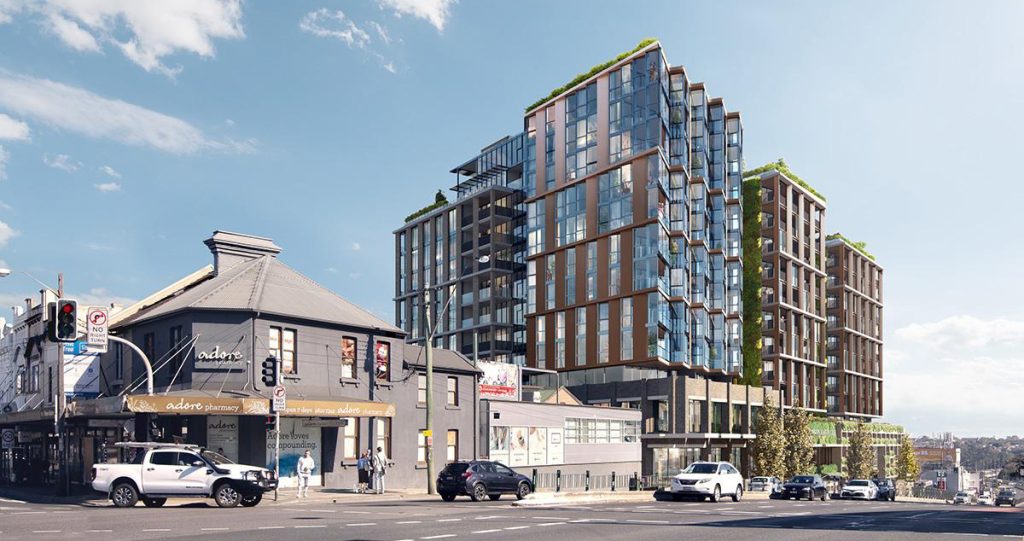
If you live around Rozelle or Balmain, you’ve probably heard people talking about Rozelle Village for years.
It’s been one of those projects that locals have watched, waited on, complained about, and quietly hoped would eventually turn into something great. Now that construction is fully underway, and with one, two and three-bedroom apartments still available, it feels like the right time to talk about it.
Not as a sales pitch.
Not as hype.
But as a real conversation starter about buying off the plan in the Inner West, or anywhere else for that matter.
Because Rozelle Village is actually a great example of the bigger question a lot of buyers are facing right now:
When you buy off the plan, are you paying for what exists today… what you believe it will become or what someone else is trying to convince you it will become?

Why Rozelle Village has so much attention
Part of the excitement around Rozelle Village isn’t just the apartments, it’s what it represents for that pocket of Rozelle.
For a long time, that site’s been a bit of an eyesore. Now it’s set to become a proper village-style precinct with new homes, new retail, more life on the street and a very different first impression when you come through that end of Darling Street.
That kind of change matters.
Not because it guarantees price growth, nothing does, but because precinct upgrades genuinely change how an area feels to live in. They affect walkability, convenience, energy, and how people use the neighbourhood day to day.
That’s why projects like this get people talking. They’re not just buildings, they’re local resets.
The real off-the-plan question: what are you actually paying for?
When buyers come to me looking at off-the-plan, they’re usually doing one of two things:
- Trying to secure a specific lifestyle outcome (new build, low maintenance, certain layout, lift access, parking, amenity)
- Or trying to lock something in now that they believe will make sense later
And most off-the-plan pricing reflects a mix of three things:
- Today’s market
- A premium for “new” (new finishes, new building systems, new amenities)
- A degree of future expectation (scarcity, precinct uplift, demand assumptions)
None of that is wrong. But it does mean buyers need to be really clear on one thing:
How much of this price is about lifestyle and convenience… and how much is betting on future value?
Because those are very different reasons to buy.
Why people choose off-the-plan (and why it can make sense)
Off-the-plan absolutely has a place in the Inner West, especially for owner-occupiers.
Some of the genuine upsides:
- You can secure a layout you actually want instead of compromising on an old floor plan
- New builds often mean less immediate maintenance stress
- The timeline can work well if you’re planning life around a move, a sale, or a growing family
- And when a development improves a pocket, i.e. new retail, better streets, more activity, that can meaningfully lift the liveability of an area
If someone says to me, “I want to live in Rozelle long term, I want a modern apartment, and I like what this precinct is becoming,” off-the-plan can be a very logical option.
The risks buyers need to be honest about
This is the part buyers don’t always sit with long enough.
1. Settlement risk
The bank values the apartment when it’s finished, not when you sign.
If the market shifts or a lot of similar stock settles at once, valuations can come in short. That doesn’t mean disaster, but it can mean you need more cash than planned.
2. Time and change
Even well-run projects evolve.
Timelines move.
Finishes get substituted.
Views change.
Surrounding sites progress.
That’s normal, but buyers need to be contract-protected and mentally prepared.
3. Unknown building life
With an established apartment, you can read strata minutes, see how issues are handled, understand levies and maintenance culture.
With a new building, you’re trusting documentation, warranties, and track records. That’s not bad, it just means the risk profile is different.
A really useful local comparison: Union Balmain next door
One of the healthiest ways to think about Rozelle Village is to look right next door at Union Balmain, where I live!
It’s no longer “new.”
It’s now an established Inner West building.
Which makes it incredibly useful.
Because buildings like Union Balmain show you what happens after the marketing phase ends and real life begins:
- What floor plans actually hold value
- What levies look like
- How the building ages
- What buyers care about on resale
- Which apartments perform best over time
When I assess off-the-plan in this pocket, I’m always comparing:
- Light and aspect
- Privacy and outlook
- Layout efficiency
- Parking usability
- Amenity vs levies
- Walkability and noise
- How resale buyers behave
Not to criticise the new project, but to ground the conversation in reality.
The off-the-plan checklist I run buyers through
If you’re considering something like Rozelle Village, these are non-negotiables:
✔ Contract reviewed properly
✔ Sunset clauses understood
✔ Inclusions locked in
✔ Valuation and funding scenarios mapped
✔ Local resale evidence analysed
✔ Nearby established buildings studied
✔ Noise, servicing, access and orientation checked
✔ Owner-occupier vs investor mix discussed
✔ Your personal time horizon defined
Off-the-plan should never be a “vibes only” decision.
So… is Rozelle Village a good buy?
The honest answer is the same one I give every client:
It depends on what you’re buying it for.
If you’re buying a home, plan to hold it, and genuinely like what that precinct is becoming, it could make a lot of sense.
If you’re buying because you expect a fast, guaranteed uplift, that’s where people can get uncomfortable.
Sometimes, off-the-plan outperforms quickly.
Sometimes it takes years to meet the resale market.
Neither is failure, as long as your decision matches your goal.
Where a buyer’s agent fits with off-the-plan
Good buyer advocacy isn’t anti-development.
It’s pro-clarity.
My role in off-the-plan purchases is usually:
- Pressure-testing pricing
- Comparing real alternatives
- Identifying risks early
- Negotiating structure and inclusions
- Making sure buyers aren’t relying on hope
- Keeping the decision grounded, not emotional
The aim isn’t to talk people out of projects like Rozelle Village.
It’s to make sure they walk in with open eyes and a plan they’re genuinely comfortable with.
Final thought
Rozelle Village is exciting for the suburb.
And it’s a great reminder that buying off the plan isn’t about being optimistic or pessimistic, it’s about being informed.
If you’re looking at it (or any off-the-plan project in Sydney) and want a second set of eyes on pricing, risk, or local comparisons, I’m always happy to have that conversation.